The wars in Iraq and Afghanistan have spurred developments in prosthetic technology that would have been the stuff of science fiction as recently as the first Gulf war in 1991. The improvements have been made possible by advances in computerization, microprocessors, and miniaturized hydraulics, along with the development of strong, ultralight materials, such as carbon fiber, that reduce the weight of prosthetic limbs.
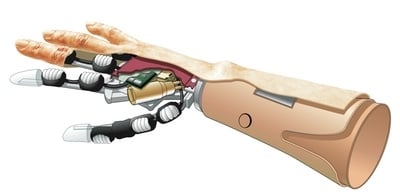
The human hand is a miracle of strength and dexterity that is almost impossible to replicate, but biotechnology companies worldwide are developing a new generation of prosthetic hands nimble enough that fingers can move independent of one another, allowing them to type and do other things that require fine motor skills.One example is a lightweight hydraulic hand called Fluidhand. Miniature hydraulics in each knuckle allow amputees, through sensors implanted in their muscles, to move and control each finger. The individually powered fingers behave more naturally and allow greater flexibility than artificial hands employing motorized fingers. As sensors located on the fingers and palm close around objects, nerves in the amputation stump pick up muscular sensations so the amputee can exert a weaker or stronger grip.
New prosthetic arms provide far more function than earlier versions. Using a technology called brain-computer interface, signals from the brain are transmitted through sensors to the prosthetic arm to move in the manner the brain directs.
Another technological breakthrough comes from researchers at the Rehabilitation Institute of Chicago who surgically transplanted nerves from the shoulder to the upper chest in a patient who had lost an arm. These rerouted nerves grew into the chest muscle, which amplified the messages sent to muscles in the arm and hand. From there, sensors signal the prosthetic limb to move in response to the messages it receives, giving the patient greater control and use of the arm.
Nothing manmade can do everything our natural limbs can, but these advances are creating greater opportunities for servicemembers who have lost limbs to participate more fully in the activities of daily life.
This article appears in the August 2011 issue of The Washingtonian.
Subscribe to Washingtonian
Follow Well+Being on Twitter
More >> Health | Top Doctors | Well+Being Blog