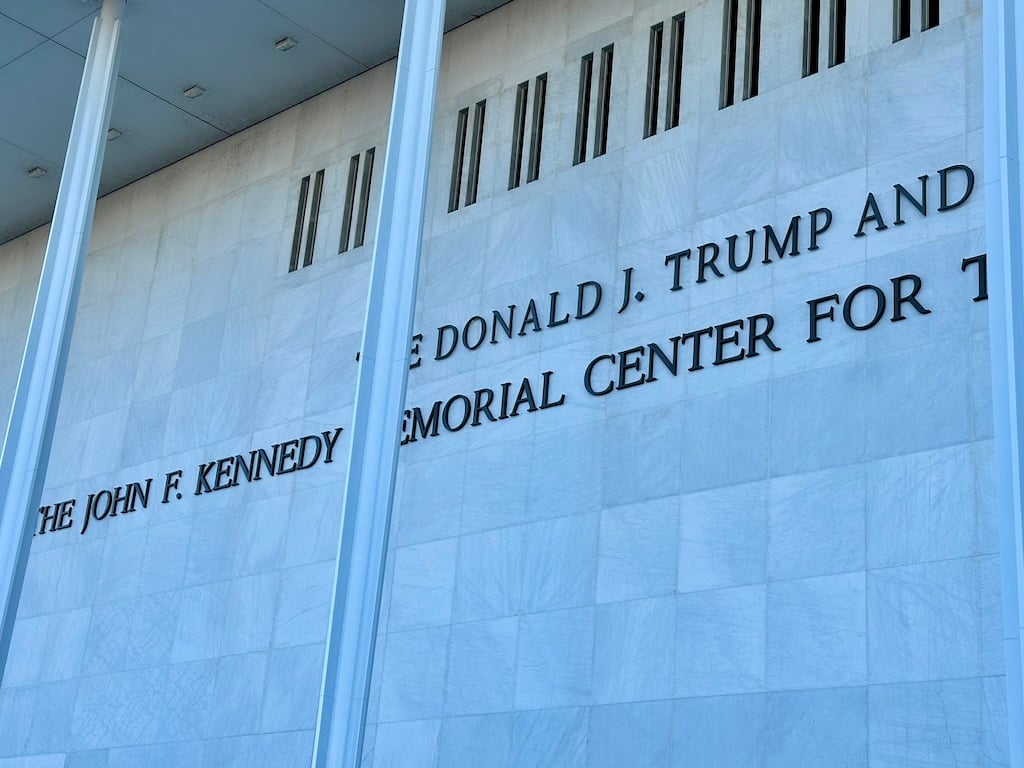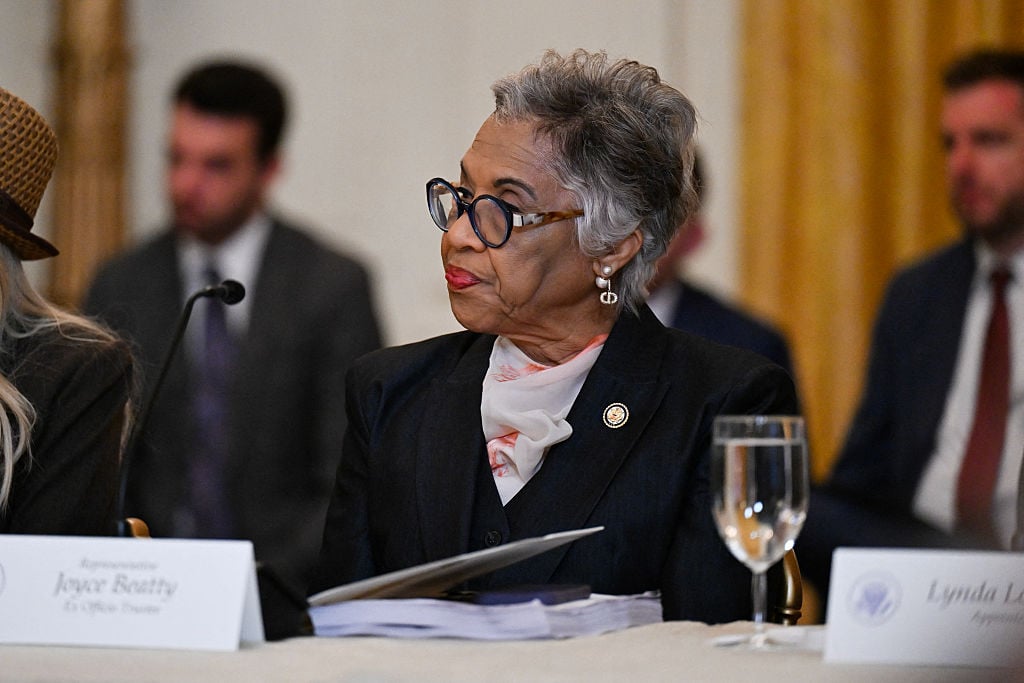
Representative Joyce Beatty of Ohio has served on the board of the Kennedy Center since 2019, but her last six months have been especially eventful. In December, Beatty called in virtually to a Kennedy Center board meeting—hosted at the Palm Beach home of Andrea Wynn, a fellow Kennedy Center board member and a major Trump donor—and was shocked by a measure that hadn’t been on the agenda: a bid to rename the arts complex after Donald Trump. When Beatty tried to object, her line was muted, and the board went on to approve the renaming. That decision was later characterized as unanimous, but Beatty—along with the other non-Trump-appointed board members, who are called ex officios—hadn’t been allowed to vote.
This episode enraged Beatty, a passionate supporter of the arts who married into a family of civil rights activists and has personal connections to the Kennedy family. She quickly filed a lawsuit to halt the renaming, and on May 29, a federal judge ruled largely in her favor, ordering the Kennedy Center to remove Trump’s name, restore ex officios to full voting rights, and halt plans to close for two years. The lawsuit has made Beatty a hero to those who have been infuriated and alarmed by the Trump administration’s takeover of the Kennedy Center. On Tuesday evening, she called us to talk about what on earth is going on over there and what might happen next.
What has it been like for you since the judge handed down his ruling?
It’s been impactful, empowering, emotional, overwhelming, and rewarding. I think the greatest thing for me has been the outpouring of people’s love for the Kennedy Center. I cannot begin to tell you the number of people I’ve never met who have stopped me in the store or who have made a phone call saying, “I remember the first time I attended an event at the Kennedy Center.” And I think it sends a strong message to the country about standing up and fighting for justice. Look, this is bigger than me. This is about the American people. This is about the artists, the performers, the institution, and it’s about the rule of law. You can’t assume that just because you’re the President, you can break the law.
You’re not the only ex officio board member of the Kennedy Center—there are a bunch from the House and Senate—so why were you the one to file the lawsuit? Why are you the face of these efforts?
Well, on the House side, I have the most seniority and I am the most active of all of our members in attending things. But more directly, I was the one in the meeting that was muted. Of all the ex officios, I was the only one on that virtual meeting where they were trying to silence me. So I was standing up for the arts, but also it was just unlawful for them to rename the John F. Kennedy Center for the Performing Arts the “Donald Trump Center.” Only Congress can do that. So I wanted to make sure that I was doing my job as a board member. We’re supposed to have oversight, and we’re supposed to follow the law.
I didn’t want to be in a big debate. I didn’t want to be in one of these screaming matches. When someone is doing something unlawful, you take it to the courts. This is a vanity project for [Trump], but for us it is our only living memorial to a well-revered President, and it became personal. The [Kennedy] family was upset, and so I decided that I would speak up with them and others. Being a member of Congress, I just wasn’t going to have it.
In the moment when you were muted, what were you feeling?
When I actually realized it was intentional, I got enraged—like, how dare you do that? It was unthinkable to me. Because you’re now denying me my right as a board member to express my opinion. All I could get out is, “This is Congresswoman Beatty. I don’t agree.” I wanted to vote no. So that opened up a whole Pandora’s box.
In March, the court ruled that you must be allowed to participate in board meetings. A couple of days later, the board met to vote on closing the Kennedy Center for renovations. What was that meeting like? Did you speak?
Yes, they allowed me to speak—they had no choice, because I had a court order. That was our first victory in the lawsuit, that the federal judge required them to make a commitment that I would be able to address the board. That meeting was held in-person at the White House, and I was allowed to say that yes, we need renovations, but we don’t need to close the Kennedy Center to do them. I said everything that I’ve said to you: that it was unlawful, that I didn’t think the Kennedy Center needed to close down.
Was the President there?
That last board meeting we had, yes, he was there for the entire meeting. And the Wynn meeting, he was there. He’s been on the last meetings that we’ve had—he’s either been in the meeting or there virtually. He doesn’t really run the meetings. He sits in the meeting, but he’s not running the meeting.
Did he respond in the March meeting when you voiced your dissent?
He did not. He didn’t say anything in opposition to it, but we had a look-stare at each other. In my opinion, it was clear that he didn’t like it—but he was not adversarial, and I was coming armed with the opinion of a federal judge.

What did it feel like to say all of that to the President?
I felt proud that I was standing up for others, and for the rule of law. I felt that I had an obligation to do it. I was the only Black person with 41 people sitting there staring at me, and I thought of what nine-year-old Ruby Bridges must have felt like when she walked into that all-white school against the odds. But I knew that I was coming in there because a federal judge had said not only that I had to be allowed to attend, but they had to let me fully be engaged and speak, even in opposition. And really, it didn’t take courage—yet it does take courage, when you’re fighting against an oligarch board that’s there to just rubber-stamp what Donald Trump wants.
What do you know about the financial situation at the Kennedy Center right now? There’s some speculation that it’s on the brink of bankruptcy.
Well, I can’t give you specifics with that. But I can tell you that, obviously, when you have an administration that has done what they’ve done—and when performers have not wanted to perform because Donald Trump made it political—that we have lost contracts, and people have gone on to other venues.
So, are there financial things? I don’t think we know the real magnitude of it, because in one meeting you’ll hear, “We’ve lost all these contracts. The center had a deficit of XYZ.” But also, “I have all these donors giving us millions of dollars.” I’m not going to say that we are in a perfect world financially, but I think because of its great history, and with the [Trump] name being removed, that people will come back to the Kennedy Center. I think donors will come back. I think performers will, too.
Can you help me understand what the President meant when he indicated that he would return control of the Kennedy Center to Congress? The board has control of the Kennedy Center, and he’s still the chairman of the board, despite saying he wants nothing to do with the place. So who’s running the Kennedy Center right now?
Well, to give you an answer: Who knows? Donald Trump will say one thing in the morning, and before noon he will say something different. “Giving it back to the Congress”—one might assume that he is relenting. But we do have a [board] meeting that’s coming up this Thursday, and we’ve not received an agenda at this time, but maybe he’s going to give us an explanation of that. Or maybe he’s going to do something else. I think it’s very difficult to determine. But that’s what makes it dangerous for us to continue this way—no major operation would operate the way we’re operating.
What can Congress do to repair some of the damage that’s been done to the Kennedy Center in the past 18 months?
I think it’s not only Congress, but Congress working with the board. There are 14 of us from the House and Senate who are ex officios, and that’s a strong voice if we meet our obligation to do due diligence. I think we have to brainstorm: How do we turn a new leaf? How do we come together and bring all of the individuals who support the Kennedy Center back together?
But the board is still stacked with Trump loyalists, and he’s still the chairman. So what would it take to work with the current board?
Well, I think it would take them following the court. This Friday, June the 12th, is the deadline for his name to come down. I believe that once that happens, performers will start saying, “I want to come back to the Kennedy Center.” We also asked the court to require the defendants to submit a second sworn declaration on June the 12th detailing the specific steps that they have taken to keep the Kennedy Center not only open, but operational [and proactively offering arts programming]. We may hear more about that in the June 11 meeting. I want to be hopeful but not naive.
Assuming you’re right and performers flock back, there’s not a lot of programming staff at the Kennedy Center right now. Just operationally, how would that work?
I think that there are people who love the Kennedy Center and would come back. Or we will post and hire. We post jobs that have 20, 30, 50 [applicants] within an hour. It’s step-by-step.
The Kennedy Center has an obligation to the National Symphony Orchestra and the Kennedy Center Opera House Orchestra. How do you make sure they don’t fold?
I’m looking into this. It is my understanding that they have not signed long-term contracts. But when you think of artists who have performed here for three decades—this is their home, and they will want to come back. They didn’t want to leave. And here’s why I am confident with much of this, because people specifically stated, “We are leaving because Donald Trump put his name on this building. It’s unlawful. And we should not be treating our only living memorial [to President Kennedy] this way.”
With the NSO, though, it seems like they do want to be at the Kennedy Center, but the sticking point is that the Kennedy Center’s board, for some reason, is not approving their budget. What do you know about this?
I don’t have a specific or direct answer for that, but that is certainly on our long list of things that we will want to get engaged with now that we’ve had this ruling. And I’m still hoping that this meeting on Thursday may talk about some of those things. But obviously those are good questions, because they’re at the forefront of what we have to deal with. We have to look at the separation clauses, we have to look at the budget and the finances, we have to look at what it would take to get them back in-house soon.
Some of the renovations are currently proceeding, just without closing the building. In your understanding, what are the renovations that need to happen, and how urgent do you think that they are?
Well, let me answer it this way: I support the renovations because they were [planned] with the board prior to Donald Trump. I am comfortable that we can begin doing them. For example, you will hear about the [water-damaged soffit panels], you’ll hear about the parking garage, and you will hear about the watering system that’s leaking. Those things are needed. But I went on a tour, and I asked the question, “Can we do these repairs in sections and keep the center open?” Trump’s operational director said yes.
I’m not an architect, so I’m just giving you my visual opinion from walking through, but some of the soffits have been temporarily fixed, so things aren’t going to fall down on somebody’s head and kill them, which is what I’ve heard Donald Trump say. And just think about it, if that were the case, would he have had the first lady’s movie premiere there with full capacity? Would he still be hosting things there with some of his wealthiest constituents?
Do you have plans for when the Trump name comes down from the facade?
In an ideal world, would I like to be there? Yes. I mean, this is history. This will be written down in the history of the Kennedy Center, and I think I’d like to see it through and be a part of finishing the story.