Nicaro bids to bring personal cooking to an area awash in chains.
The attractive dining room at Nicaro shows what can be accomplished on a limited budget. Photograph by Scott Suchman.
In the early stages of Silver Spring’s makeover, a lot of us wondered whether any good, independent restaurants would pop up amid the soaring condos and luxury townhouses, the big-box stores and chains. A suburb with more authentic urbanity than many parts of DC sometimes seemed headed for a sanitized, plastic vision of a town center.
But then Mandalay, the Myint family’s home-style Burmese restaurant, emigrated from College Park. Around the same time, Jackie’s—with its kooky, hippie vibe and quirky roster of comfort food—set up shop in a former auto-parts garage. Last year, Ray’s the Classics brought the Lee Building back to life with a mix of big-city sophistication and fat-cat eating—steaks, chops, and crab royale. These aren’t just good restaurants; they’re briefs on behalf of the little guy, the plucky independent restaurant.
Nicaro follows their lead—and in some ways extends the argument. The eclectic American menu might not stir the blood of anyone accustomed to the better dining rooms of downtown DC, but when you consider that its neighbors include a jerk-chicken spot, a Peruvian rotisserie, and an Italian red-sauce joint, it begins to look positively audacious. Venison with spaetzle. Lamb three ways. Roasted quail with berries.
The chef, Pedro Matamoros, comes to Nicaro by way of the Tabard Inn, where he spent the previous seven years learning how to make fresh pasta, prepare charcuterie from scratch, and find and keep good local purveyors of produce, fruits, and even oysters.
How much you like Nicaro will depend on how much of a soft spot you have for such purity of intent—whether honesty of approach is enough to keep you coming back to explore its menu and if not overlook its flubs, then perhaps forgive them.
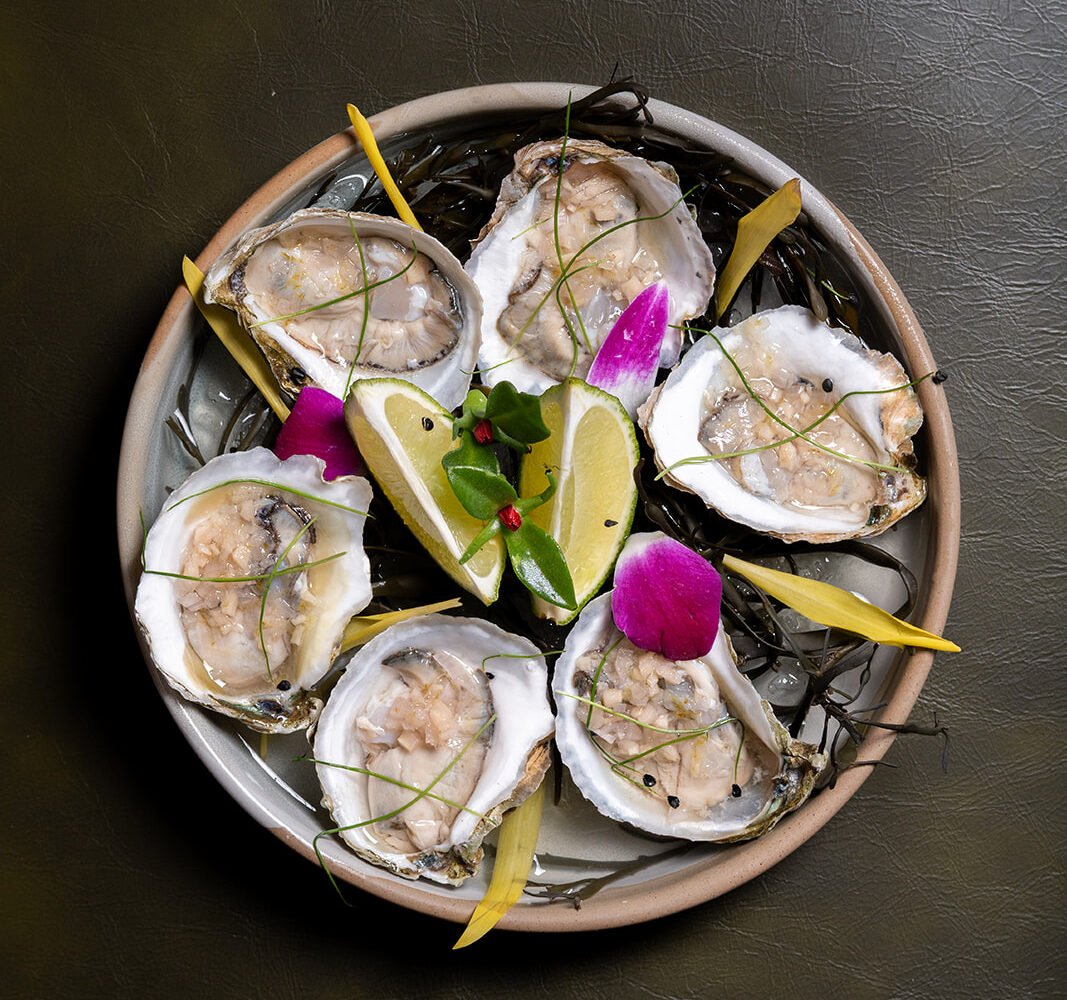
It helps that the oysters are fresh and cool, the hand-rolled tagliatelle is elegant, and the assertively spiced pâtés and rillettes will delude you into thinking you’re in a good French bistro.
I’d put a bowl of butternut-squash soup fortified with coconut milk and bands of toasted coconut right up there with them. Thick, spicy, and aromatic—the perfume from the kaffir-lime leaf is as sly and unmistakable as the Nina Simone tunes on the soundtrack—it tastes more like a curry than a soup, and a great one. I wish the kitchen had served it with rice.
Nicaro—the name alludes to the chef’s native Nicaragua—is Matamoros’s own place. It’s a huge achievement for any chef to oversee the operation as well as call the shots in the kitchen. Being a small-pocketed independent, though, necessitates making bargains. Big ones. And much as I admire the restaurant’s conscientious sourcing and the laborious work required to assemble plates this complex and intricate, I cringe at the prices. With some appetizers surpassing the double-digit mark and many entrées in the mid-twenties, Nicaro raises expectations it’s not yet equipped to deliver.
The long, narrow dining room—a separate bar adjoins it—shows what can be accomplished with soft lighting, good table spacing, a gentle color scheme (lime and darker lime), and a playful sculpture. But smartly done isn’t the same as soothing, and although it breaks ranks with its fluorescent-lit neighbors, no one would confuse the place with a fine-dining retreat. It’s only after you step back onto Georgia Avenue and catch sight of the empty pawnbroker shop across the street that you begin to appreciate its charms.
Or maybe not. “I don’t know,” said a neighbor I took to dinner one night. “I guess I was just expecting more.”
“More?” I asked.
“More—more atmosphere, more service.”
She had adored her appetizer—a hunk of deep-fried Camembert with red-wine-poached pears so good they could do double duty on the dessert menu. Of the many sweet notes on the menu, it’s one of the few that pay off.
But her sablefish had done nothing for her. I noted the chef’s use of a beurre rouge, a red-wine-and-butter sauce, to amplify the richness of the fish, and the clever leavening addition of thin-sliced turnips, sweet and clean and crunchy. She shrugged. Interesting, she seemed to say, isn’t the same as satisfying.
So, too, with a plate of venison. We had polished off the spaetzle and the leaves of Brussels sprouts but left behind the tame-tasting meat.
On another visit, my mother picked at her Caesar salad. She loved the fresh anchovy, and the leaves of lettuce were pristinely handled. So what was wrong? “It’s a presentation of ingredients,” she said. “It’s not a salad.”
There was the same disjointed quality about a pretty, two-part salmon-and-tuna tartare—almost no tuna is flavorful and firm enough these days to justify serving it in a tartare.
Playing with deconstructions, setting unlikely flavors against one another—all that’s to be expected of a chef out to prove his worth. But I like Nicaro best when Matamoros is content to mine the authentic flavors from his ingredients, as he does with his pastas and pâtés.
Short ribs with polenta isn’t terribly original or pretty, but it’s a dish you’ll come back to—an insistent red-wine reduction accomplishes in a single stroke what grander adornments elsewhere on the menu don’t. And a lamb three ways—lamb chops, lamb sausage, and braised lamb shoulder—amounts to an unlovely pile-up on the plate but eats wonderfully. It’s not showoffy, not innovative, just richly rewarding.
There are special things about Nicaro. But that’s not to say it’s the kind of place you want to reserve for a special night out. Above all, it needs and deserves supportive patrons who can recognize a serious, thoughtful effort and encourage it to evolve.
It’s easy to love the underdog, the guy who dares to fly solo and make his way against the odds. But sometimes it’s not enough to know who you are; you have to know where you are. If Nicaro learns that lesson, it has a chance to grow into something strong and durable—something more than just a plucky independent.
This review appeared in the February, 2008 issue of The Washingtonian.