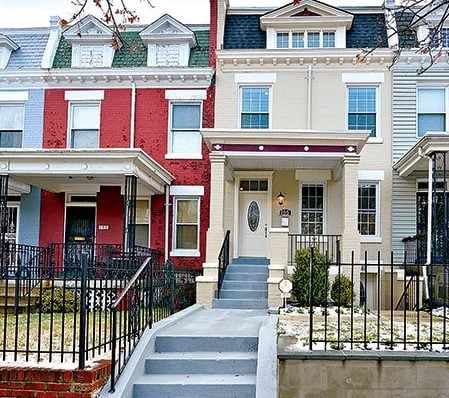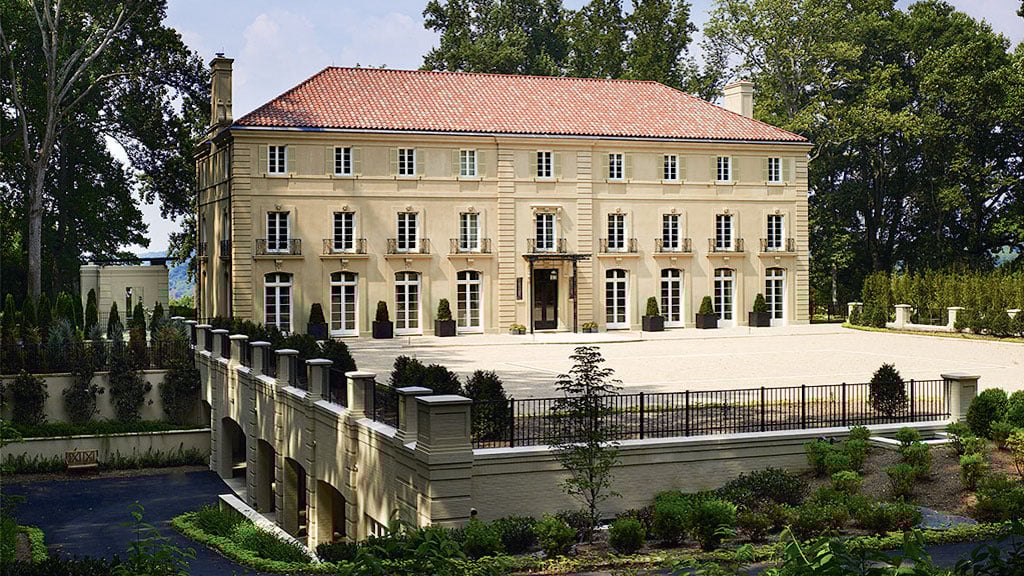
When the owners of this center-hall Colonial in DC’s Forest
Hills were on vacation, a toilet overflowed upstairs, flooding the entire
downstairs and ruining their traditional kitchen. They decided it was a
chance to try something new.
“The owners had seen a modern kitchen we inserted into a
traditional Craftsman and loved that idea of playing with the
architectural vernacular,” says architect Robert Gurney.
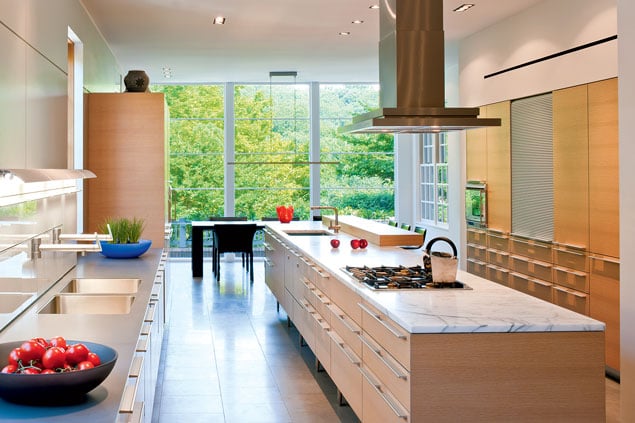
Gurney started by combining a series of small rooms—a breakfast
nook, kitchen, small alcove, and pantry—into one space, culminating in
floor-to-ceiling windows that overlook the wooded back yard. To achieve a
streamlined, minimalist look, he chose white-oak cabinets by Bulthaup and
mounted them flush with the wall, leaving the space underneath
exposed.
“This enabled the kitchen to have a much lighter feeling,” says
Gurney. “It’s something new, this idea of ‘floating’
kitchens.”
Instead of using a more traditional painted drywall, Gurney
installed a series of aluminum panels behind the sink, giving the
protection of a backsplash but also bouncing light around the room. Glass
doors hidden in the panels store knives and utensils. Gray limestone
floors, which are heated with radiant panels, pick up the dark veins of
the Calcutta Gold marble on the island and the quartzite around the
sink.
George Collins, the project’s general contractor, says that
he’s seeing more modern kitchens in traditional homes: “It doesn’t seem
out of scale or out of place. You walk into this kitchen and it feels like
it belongs.”
Explore More Dream Kitchens ››
This article appears in the October 2012 issue of The Washingtonian.