Standing in the capacious outfield at DC’s Griffith Stadium during batting practice, Irv Noren glanced at the scoreboard hovering over left field and told Mickey Mantle: “Geez, you might be able to hit one out of here today.”
Noren knew all about the stadium’s prevailing winds—when the ballpark held the heat, when the breeze blew through the open grandstands. He had played two years for the Washington Senators before being traded to the New York Yankees in May 1952 as insurance against Mantle’s infirm right knee.
Noren knew that Babe Ruth had hit a ball into the oak tree on the other side of Griffith’s center-field wall, that Larry Doby had hit a ball over the 31-foot wall in right field, prompting a call to the Senators’ front office: “Someone from your stadium just threw a ball onto our house and woke up my children.” He also knew that no one in major-league history had ever hit a ball over the 32 rows of concrete bleachers erected in left field in time for the 1924 World Series, the only one the Senators had ever won. Noren thought Mantle might be the man to do it.
April 1953 was as kind to Mickey Mantle as the year before was cruel. Then he’d been expecting his father’s death; now he was awaiting his first child. His draft status—and his status as Joe DiMaggio’s heir—had been resolved. He had arrived at spring training a star who had batted .345 in the 1952 World Series, driving in the winning runs in game seven.
On April 9, in an exhibition game in Pittsburgh, Mantle hit a ball onto the roof at Forbes Field, a 450-foot effort that duplicated Babe Ruth’s last major-league home run. The Babe would have been impressed: The night before, Mantle, Billy Martin, and Whitey Ford had missed the train from Cincinnati while cavorting in nearby Covington, Kentucky. They had paid a taxi driver $500 to drive them to Pittsburgh, arriving just in time for batting practice.
Three days later, at Ebbets Field in Brooklyn, Mantle was chatting with the home-plate umpire when the public-address announcer greeted him with news from Joplin, Missouri: “Mickey doesn’t know it yet, but he just became the father of an 8-pound, 12-ounce baby boy.”
Chuck Stobbs, a lefty newly acquired from the Chicago White Sox, was the Senators’ starting pitcher on Friday, April 17. Noren told Mantle, “You can hit him pretty good.”
The weather had played havoc with the first week of the season, forcing cancellation of the Senators’ home opener set for Monday, April 13. The Senators gained an important spectator at Thursday’s rescheduled festivities: President Eisenhower returned from a golf vacation in time to make the traditional first heave, preventing a grievous insult to the home team.
By Friday afternoon, the fans and VIPs had disappeared. Paid attendance was 4,206—an embarrassment camouflaged by 3,000 boys in the upper deck along the third-base line who had gotten in free. It was Patrol Boy Day.
With two outs in the top of the fifth and the Yankees leading 2–1, Stobbs committed pitching’s cardinal sin: He walked Yogi Berra with two outs and the bases empty, bringing Mantle to the plate.
When Stobbs made his debut with the Red Sox in 1947, he was 18, the youngest player in the major leagues. Now he was in his seventh season and making his first start for the Senators. He was only 23 but had gotten old early. Shoulder stiffness had limited his innings during spring training. Mantle wasn’t feeling up to par, either; he’d pulled a thigh muscle the day before. He stepped to the plate with a borrowed bat—a 34-ounce, 34½-inch Louisville Slugger belonging to teammate Loren Babe, who hit only two home runs in his major-league career.
As Mantle settled into the batter’s box, he was greeted by the friendly visage of “Mr. Boh” 460 feet away in deep left field. Mr. Boh was the one-eyed, mustachioed mascot of the home brew, National Bohemian.
Left field in Griffith Stadium was about as vast as center field in Yankee Stadium—405 feet down the line. That forgiving acreage was the reason Senators manager Bucky Harris thought a control pitcher like Stobbs would flourish in Washington.
Griffith Stadium’s construction was minimalist: exposed steel girders and concrete. Its charms were supplied by the neighborhood—the smell of bread rising at the Wonder Bread factory on Seventh Street, where stadium vendors purchased their hot-dog rolls, and the African-American spirituals from Elder Solomon Lightfoot Michaux’s church greeting dispirited fans after another loss. A tall oak stood sentinel behind the center-field wall.
Mantle took Stobbs’s first pitch for a ball. On the Yankee bench, Jim Brideweser said to coach Jim Turner, “You know, I bet this kid could hit that big scoreboard.”
The second pitch was a fastball or a slider, Stobbs said later—he couldn’t remember. Either way, it was over the plate.
As Stobbs went into his windup, a gust of wind blew through the open facade behind home plate. “Straight out to left field,” recalls Bill Abernathy, a patrol boy who was sitting with his father in the empty presidential box.
Sam Diaz, an observer at the Weather Bureau, would later report: “Between 3 and 4 pm, there were gusts up to 41 miles per hour in the direction of the bleachers at Griffith Stadium . . . the lightest gusts were at 20.”
The ball left Mantle’s bat at an estimated 113 miles per hour. Clark Griffith, the namesake and grandson of the Senators’ owner, was sitting in the family box behind the third-base dugout, having cut class at Sidwell Friends. “It went up and got caught in the jet stream,” he says. “It took on a life of its own.”
Roy Clark, the musical son of a Washington square-dance bandleader, was sitting with his father along the first-base line. The thwack of bat and ball stayed in his memory. “It just echoed in that ballpark,” Clark says. “Even before it was halfway to its destination, you knew that it was gone. Looked like it was in the air for five minutes.”
The ball kissed Mr. Boh’s cheek, clipping his mustache above the word “beer” as it headed toward Fifth Street. The visiting bullpen down the left-field line offered an unimpeded view.
“You’re waiting for it to come down, to go into the crowd,” said backup catcher and future Yankees manager Ralph Houk, who died this year. “The next thing it’s over the crowd and out of the stadium. There’s a moment of silence. Everybody is looking that way, even all the infielders on the opposing team and the left-fielder. He’s looking for it, and he can’t believe it went out.”
Mantle rounded the bases with his customary modesty, head down as he touched each bag. The ball was hit so high that he was at second base by the time it came down, second-baseman Wayne Terwilliger says.
It was Mantle’s first home run of the season, the first of 29 he would hit at Griffith Stadium. Returning to the dugout, he smiled in a way that acknowledged his debt to the wind.
Years later, after Roy Clark had become a renowned country singer and Mantle’s friend, Clark told him he had been at Griffith that day. “He looked like a kid on Christmas morning,” Clark recalls. “And then he said, ‘That wasn’t the hardest ball I ever hit.’ ”
In the press box, Arthur E. Patterson, the Yankees’ director of public relations, regarded the ball’s disappearing act as an opportunity.
Patterson was an old sportswriter who had spent 17 years at the New York Herald Tribune before making the transition from hack to flack, first for the Yankees, then for the Dodgers. He knew a good story even if he couldn’t see what happened—the left-field bleachers cut off the view from the press box.
“That one’s got to be measured!” Patterson said. Or so legend says. He dashed from the stadium on a gust of inspiration. “To his dismay, the baseball already landed when he arrived,” sportswriter Red Smith wrote years later, “so he picked out the spot where it might have come down.”
Some innings later, he returned to the stadium with a distended baseball and a story he would repeat in a variety of iterations until his death.
He arrived on Fifth Street to find, as Dan Daniel recounted in Sporting News, “a surprised and delighted Negro lad” named Donald Dunaway running down the street with a baseball. They entered into an arrangement—the boy, who lived around the corner at 343 Elm Street, would show him where the ball had landed in exchange for whatever money Patterson had in his pocket. The sum was variously reported as 75 cents, $1, $5, and $10. Once the deal was struck, Patterson testified, Dunaway led him to the back yard of 434 Oakdale Place, a two-story brick rowhouse.
Hustling back to the press box, Patterson reported that the ball had traveled 565 feet, making it the longest home run ever measured. None of the residents of the press box ventured out of the stadium to attempt to verify Patterson’s claim. Three days later, in a Washington Times-Herald column, Bob Addie took readers “behind the scenes to show you how these records are determined.”
“Here’s the dope,” Addie wrote, paraphrasing the ebullient PR man. “The fence is 55 feet high to the beer sign. I walked 66 feet from the 391 mark to the back where Mantle’s ball cleared the bleacher limit. That would be 457 feet. Now I paced off 36 strides, which means three feet a stride or 108 feet to where the ball eventually landed in the backyard on Oakdale Street. It’s a small backyard so the ball didn’t have a chance to bounce much. So add them all up and you get 565 feet.”
The announcement was piped into Bob Wolff’s broadcast booth by the public-address announcer. The next morning, Mickey Mantle and Donald Dunaway were front-page news in every sports section across the country. “The magnificent moppet of the Yankees today hit the longest home run in the history of baseball,” Joe Trimble declared in the New York Daily News.
Ordinary language could not contain him. A new term was coined: the tape-measure home run.
Mantle signed endorsement deals with Wheaties, Camels, Gem razors, Beech-Nut gum, and Louisville Slugger. There was a wardrobe of Mickey Mantle clothing—Esquire socks, Van Heusen shirts, Haggar slacks.
Stobbs was demoted to the bullpen at the end of May, having lost five of his first seven starts for the Senators. He’d be remembered for one pitch in a 15-year major-league career. Every April 17, a friend who worked at the concession stand behind home plate sent Stobbs a card. Sometimes he signed it “Mickey.” Thank you for what you did for me.
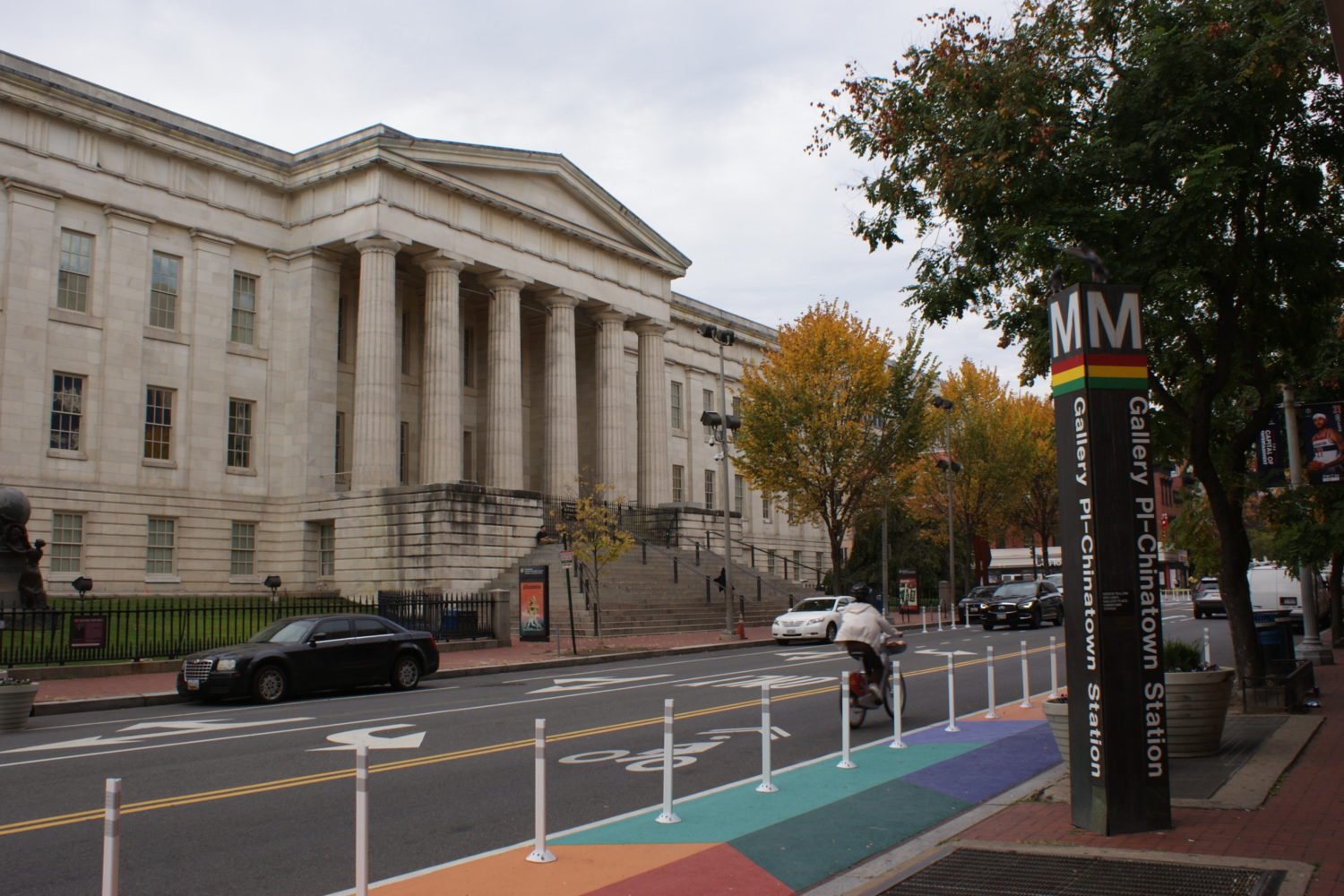
In 1953, Griffith Stadium was a white man’s palace on the edge of a black neighborhood called LeDroit Park—the logical place to look for Donald Dunaway.
No Donald Dunaways were in the 2006–08 DC phone book. In the 1954 directory, no Dunaways were at 343 Elm Street. Donald Dunaway wasn’t in DC public-school records for Lucretia Mott Elementary, the “colored” school attended by most LeDroit Park children. Nor was he enrolled at Garnet-Patterson Junior High.
The Hall of Fame and the Yankees’ front office had no updates in their files. Letters and newspaper clippings left in every mailbox on Elm Street and Oakdale Place elicited no reply. A private eye found no trace of Dunaway in Social Security death records or military service records. She suggested a deed search for 343 Elm Street—no Dunaway. Neither the current owner nor the one before had heard of the family.
The men who were gathered under the food tent at the annual LeDroit Park reunion had trouble placing the name. Dunaway? Yes, there was a Dunaway. No, there wasn’t. I thought Albert Taylor caught that ball.
Bobby Lane, the unofficial neighborhood historian, put an end to the discussion: “There ain’t no tape measure, and there ain’t no Dunaway.”
I engaged Brad Garrett, renowned former FBI special agent. Garrett spent nearly five years finding Mir Aimal Kansi, the perpetrator of the 1993 CIA murders, and obtained confessions from the DC sniper. But Dunaway eluded him. After consulting secure databases, he said: “This guy is harder to find than Kansi.”
LeDroit Park was added to the National Register of Historic Places in 1974, but in summer 2007 its renaissance hadn’t reached Dunaway’s old block. Some houses had for rent signs spray-painted on plywood doors. A man at the end of the street said he knew Donald—they had gone to school together: “He passed away, but I don’t remember what year.”
Then a woman named Sandra Epps appeared on Oakdale Place, offering to make introductions. After two years of shoe leather, mailbox stuffing, and unanswered phone calls, doors opened. Miss Rosa Burroughs invited me into her parlor, across the street from the Dunaways. Miss Rosa knew the family. Donald was slight and had a light complexion. She’d seen him at the bus stop at 14th and P just the year before but didn’t know how to get in touch with him. Perhaps Miss Sarah would—she’d ask next time she saw her at bingo.
Six months later, Miss Sarah, who had been feeling poorly, returned to bingo. Oh, yes, she remembered Donald Dunaway and his sister, Maxine, the wife of Elder Walter McCollough, pastor at Bishop C.M. “Daddy” Grace’s United House of Prayer. The church provided a phone number.
One night, Maxine McCollough answered the phone. “Yes, he caught the ball,” she said. “But why don’t you ask my brother?”
“You couldn’t have been looking very hard,” Donald Dunaway said when he answered the phone in his apartment less than two miles from where he had found the ball.
Approaching his 70th birthday, he wasn’t in the best of health—he had been laid low by diabetes and arthritis. A gray-speckled beard failed to obscure his smile. But he did seem a bit stung to hear that the boys from the old neighborhood didn’t recollect him. “But they remembered Duckie, didn’t they?” he said, referring to his nickname.
Although Dunaway had been wheelchair-bound for most of a year, he agreed to take a trip back to his old stomping grounds. Walking with a cane, he shuffled to a waiting car.
“There,” he said when we reached Fifth and Oakdale. “Right there.”
His account of April 17, 1953, was different from the codified version. Sometimes he contradicted himself. But he was adamant and consistent about the big things. He didn’t see the ball land on the fly in the back yard of 434 Oakdale Place. And he never showed anyone where he had found it.
He was 14 years old—not ten, as Patterson had reported—a sixth-grader at Bundy Elementary, a school for hard cases.
“I was mischievous,” he said with a smile. He was a member of the LeDroit Park gang and wore the red and black colors. On April 17, he said, “I snuck out of school at recess and kept going.”
The ballpark was less than two blocks from the rowhouse he shared with his mother, grandmother, sister, and half brother. Dunaway was a Senators fan and would swing on the porch listening to the game on the radio. He had an entrepreneurial interest in Griffith Stadium. Sometimes he sold scorecards, sometimes he ran errands; mostly he hung out in the parking lot and waited for foul balls. He might catch as many as three on a good day and sell them to fans for $1. Usually he sneaked into the stadium. There was a lumber yard across the way on Seventh Street and plenty of boards lying around to help scale the back wall opposite the Freedmen’s Hospital morgue. But on April 17, he was a paying customer. “Had me some money,” he said—savings from selling papers inside the ballpark.
He bought a 75-cent ticket for the left-field bleachers and took a seat on the concrete benches a row or two above the left-field fence: “Down low, close enough to touch the ballplayers.” He marked the place on a photo that appeared in the Post the next morning.
He saw the ball heading in his direction, saw it hit off the beer sign, watched as it headed out of the yard on a trajectory that might have carried it into his back yard two blocks away save for the intervening rowhouses and the laws of physics. “I could see when it hit,” he said. “I turned my head around and saw the flight.” He remained seated long enough to watch Mantle cross the plate. Then he stood up: “Out of some perverse instinct, I said, ‘Let me go see if I can find it.’ ”
He started down Oakdale Place, lined with apartments and rowhouses. He walked down one side of the street and up the other, searching gardens and under cars. Dan Daniel reported in Sporting News that “a Negro woman hanging out one of the windows” had directed Dunaway and Patterson to the site. Not true, Dunaway said. He was alone.
In 1953, a row of six attached houses faced the left-field wall of the stadium. A swath of grass—“a cut-through,” Dunaway called it—ran behind the houses and parallel to the side wall of 434 Oakdale Place. “Something told me to look in the back,” he said. “I went through the little cut.”
In the fall of 2008, the lot once occupied by the Fifth Street rowhouses was empty, enclosed by a chain-link fence with a sign proclaiming Howard University’s intention to rebuild: coming soon, new homes at historic ledroit park. (Two years later, the sign is gone. There’s no other sign of progress.) The fence made it impossible to reach the back yard of 434 Oakdale Place, where Patterson said Dunaway had led him to the ball.
I asked Dunaway to show me how far back along the fence he had found it. “Under the window,” he said, pointing to a second-story window on the brick side wall, at least 25 feet closer to Oakdale Place and to the stadium than Patterson’s declared location.
Which meant the ball had never reached the back yard of 434 Oakdale at all.
“No,” he said. Never said it had.
Dunaway took the ball to an usher: “He said, ‘You found that ball? Damn, you is kidding.’ ” The usher escorted him to the visitors’ locker room, where they were greeted by a clubhouse attendant, who summoned someone who looked official. Dunaway assumed he was a reporter because he wrote down everything.
The boy didn’t provide an exact address and never mentioned 434 Oakdale Place. Nor did he take the man to the spot where he had found the ball: “I told him I found it on Fifth Street behind a guy’s house. I told him where to go look for it himself.”
What did the man look like? “White,” he said. “He shook my hand. He said it might have been one of the longest ever.”
Dunaway handed over the prize and was promised a new ball autographed by Mantle. “He gave me $100,” he said. “The guy told me how famous I would be for catching the ball. I was more excited about the money.
“He gave me a ball then. It was autographed by four or five players. I gave that ball to one of my grandnephews. He was playing baseball with that as he was growing up.”
That afternoon, his uncle Willie, a railroad porter who lived with the family when he wasn’t traveling, took him shopping on Seventh Street. Dunaway bought khaki pants, socks, shirts, tennis sneakers, and, for his uncle, a couple of beers. He spent the rest of the money on candy, pinball, and taking girls to Tom Mix shows at the Dunbar Theater.
He finished the school year, but sixth grade was his last. That summer, he was caught stealing and was sent to Blue Plains in Southeast DC, once called the Industrial Home for Colored Children. Dunaway ran away that fall.
He didn’t go back to school or the old neighborhood. He didn’t want any part of truant officers looking for him in LeDroit Park. He lived on the streets and with an uncle in Anacostia, who let his mother know where he was. He spent afternoons at a police boys’ club on Florida Avenue where no one asked questions, worked at a shoeshine stand, set pins at a bowling alley. Trouble led to incarceration in a juvenile facility in Ohio, where he learned to do laundry, to say the rosary, and that he didn’t want to spend any more time in jail. He was 20 and had five months of parole to serve when he was released after five years.
He worked in hotel laundries around Washington until the mid-1980s. After that, he survived on frugality, good luck—he hit a couple of $5,000 Four Ways in Atlantic City—and “the grace of God,” according to his brother-in-law, Elder Walter McCollough.
Dunaway never married, which he regretted, and he had a daughter whose name he couldn’t spell. Most of his friends from the old neighborhood were dead. But the memory of the day he hit the jackpot at Griffith remained vivid. “One big day,” he said. The best day of his life.
Donald Dunaway passed away on March 3 of this year. He was 71. Mickey Mantle was inducted into the Hall of Fame in 1974, 21 years after Dunaway’s ball arrived in Cooperstown. He died in 1995 at age 63.
This article first appeared in the November 2010 issue of The Washingtonian.