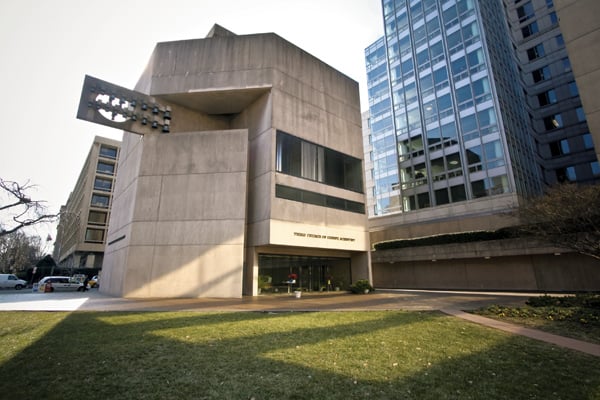
The church at 16th and I streets in downtown DC does not match the usual images of a visually appealing house of worship. It bears no resemblance to the picturesque churches of New England with their white clapboard and soaring steeples. And it has none of the robust stonework and stained-glass windows of a Gothic cathedral.
The Third Church of Christ, Scientist, is modern architecture. Octagonal in shape, its walls rise 60 feet in roughcast concrete with only a couple of windows and a cantilevered carillon interrupting the gray façade. Surrounded by an empty plaza, it leaves the impression of a supersized piece of abstract sculpture.
The church sits on a prime tract of land just north of the White House. The site is so valuable that a Washington-based real-estate company, ICG Properties, which owns an office building next door, has bought the land under the church and an adjacent building originally owned by the Christian Science home church in Boston. It hopes to cut a deal with the local church to tear down its sanctuary and fill the assembled site with a large office complex. The congregation, which consists of only a few dozen members, is eager to make the deal—hoping to occupy a new church inside the complex.
DC’s Historic Preservation Review Board has refused to permit the church’s demolition, designating it a historic landmark in December 2007 and then issuing an order that it must remain standing. The 38-year-old church was nominated for landmark status by the city’s leading preservation groups, the DC Preservation League and the Committee of 100 on the Federal City, which consider it an outstanding example of Brutalism, an architectural style that gained popularity in the 1950s and ’60s. The architect, Araldo Cossuta, was a partner of I.M. Pei.
While some architects favor saving the church, there is outrage among members of the congregation, who have a list complaints about the building’s shortcomings. The fortresslike exterior, paucity of windows, and smallish entrance suggest a World War II bunker that does not convey a welcoming spirit. Heating and cooling costs are high, the concrete is cracking, the roof leaks, and the building needs millions of dollars of renovation.
A political and legal battle has developed, and new players have jumped into the fray, raising questions about architectural quality and the city’s power over historic properties as well as religious liberty and property rights. Mayor Adrian Fenty has signaled his preference for replacing the church with a tax-generating office building, and Councilman Jack Evans has introduced legislation to allow demolition by exempting the church from the city’s historic-preservation law. A Washington-based foundation dedicated to protecting the free exercise of religion is supporting the congregation, and the National Trust for Historic Preservation wants the church saved.
DC’s planning director, Harriet Tregoning, has held a hearing to consider the church’s appeal of the Historic Preservation Review Board’s denial of a demolition permit, and her decision is expected soon. Whatever her ruling, the losing side seems likely to head to court, where the dispute would shape up as a test case of national importance.
The conflict over the church has brought to the fore a broader issue that will be played out in Washington over the next decade: Of the thousands of modernist buildings built from the 1940s through the 1970s, which ones have the architectural distinction or other significance to merit protection? Are some of these structures, often not that attractive or lovable, worth saving as a reminder of their time? Are works by I.M. Pei, Edward Durell Stone, or Chloethiel Woodard Smith as important as the work of John Russell Pope or Adolf Cluss? Is Brutalism worthy of the same respect as Beaux Arts?
No tears will be shed by anyone about the demolition of many of Washington’s postwar office buildings. No one is objecting as the boring boxes in downtown DC and Rosslyn are gutted and rebuilt or flattened and replaced. No one rushed to the picket line to protect DC’s old convention center or the Capital Centre, home of the old Bullets and Capitals.
Donovan Rypkema, a Washington real-estate consultant with experience in preservation issues, puts it this way: “Mediocre judges don’t belong on the Supreme Court, and mediocre buildings don’t deserve historic designation. . . . The vast majority of what has been built in America in the last 50 years is crap.”
A few of DC’s modern buildings already have been protected with landmark status, the first being Arena Stage in 1980, which was designed by Harry Weese, the architect who also designed Metro’s subway stations. Other newly designated landmarks include the Watergate and the Washington Hilton as well as works by Ludwig Mies Van Der Rohe (Martin Luther King Jr. library), Marcel Breuer (Department of Housing and Urban Development), and Victor Lundy (US Tax Court). Others are so admired that they seem certain to join the protected list—from Philip Johnson’s pre-Columbian museum at Dumbarton Oaks to the East Building of the National Gallery of Art by I.M. Pei.
The dilemma will arise on the buildings between the iconic and the crappy, buildings that may be judged important by architects or historians but ordinary or ugly by nonexperts. Most of these structures are approaching middle age—50 years is the customary point when they are first up for historic designation—and they house some well-known government agencies and private institutions.
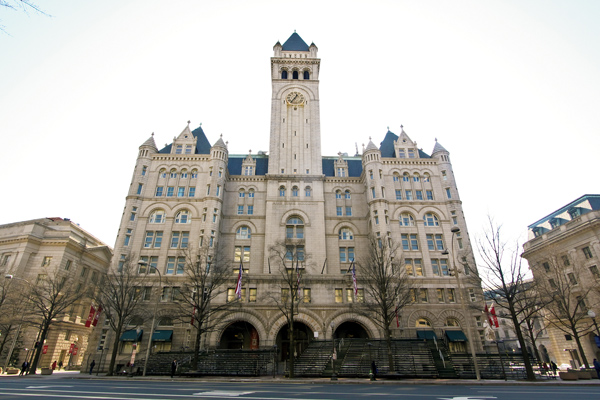
The Old Post Office, built in 1899 in Romanesque Revival style, was slated for demolition by the federal government in the early 1970s, but a group of citizens protested under the banner Don’t Tear It Down and the building was spared. Photograph by Chris Leaman
Anyone who walks the streets can play the game of what should be saved and what could be torn down. How about the bland structures built in the 1950s for the Washington Post Company and the Brookings Institution? On Capitol Hill, how about the Madison Building of the Library of Congress, which stands in modern counterpoint to the neoclassical Capitol and the library’s ornate Jefferson Building? What about two of the city’s most frequently panned structures—the cake-box Kennedy Center and the headquarters of the Federal Bureau of Investigation?
In a culture that often worships the new, there is appeal in the idea of preserving historic buildings as manifestations of the city’s collective memory. Mixed in with newer structures, older buildings give neighborhoods visual richness and variety in scale and style. They’ve played a role in the revival of Washington’s original commercial district north of Pennsylvania Avenue. They are an attraction for tourists; more than 30 historic houses in the region are open to the public.
Washington has evolved into a central player in the preservation movement. The federal government owns many historic properties in the capital, it provides tax breaks for renovation, and the National Park Service is arbiter of the National Register of Historic Places, which now lists 80,000 nationwide. Many preservation groups, including the National Trust for Historic Preservation, are headquartered here, and the Mid-Atlantic region is a treasure trove of historic places, from Williamsburg to Fort McHenry. DC’s preservation law, just past the 30th anniversary of its passage, is one of the strongest in the nation.
DC has nearly 600 individually designated landmarks and another 23,500 properties inside 44 historic districts. In the suburbs are another 600 landmarks and 60 historic neighborhoods.
Some of these landmarks are the ones you’d expect: the White House and the Capitol, the Supreme Court and the Treasury Building, the Smithsonian Castle and Washington National Cathedral, Robert E. Lee’s house in Arlington and Clara Barton’s in Glen Echo, the Corcoran Gallery of Art and the Phillips Collection, the great monuments to Washington, Lincoln, and Jefferson.
But there are many others less well known: the Uline Arena in Northeast, where the Beatles played their first American concert; the modest suburban home in Alexandria where Gerald Ford lived; a pathology building at Walter Reed Army Medical Center that is the nation’s only building constructed to survive a hydrogen bomb; a gas station on P Street, built in 1937, with the classical look of a bank. Lots of historic buildings have been adapted for new uses, including the 130-foot chimney of the Georgetown incinerator that’s now part of a Ritz-Carlton, a refrigerated warehouse reworked as the Washington Design Center, a Gilded Age mansion on Connecticut Avenue that is home to the Church of Scientology, and a French Renaissance carriage house near Dupont Circle that is now a gay bar.

Mount Vernon photograph courtesy of Mount Vernon Ladies Association
The regulation of historic properties—both declaring them landmarks and protecting them from demolition—has become embedded in the local real-estate business. Just as no project goes forward these days without a review of its environmental impact, so too has historic preservation taken a seat at the regulatory table. As preservationists and developers have learned to work together, conflicts over individual landmarks have lessened. Though many neighborhoods have welcomed historic designation, others have resisted. Residents of Chevy Chase DC, a Northwest neighborhood on the Maryland line that includes many old homes dating from 1907 to 1947, voted last fall against historic designation by more than three to one.
Washington Slept Here
The idea of historic preservation in the United States goes back to a moonlit night on the deck of a steamer churning along the Potomac River past George Washington’s Mount Vernon estate. Aboard on that 1853 trip was a South Carolina woman who was saddened to see the “ruin and desolation” of the plantation house that was the pride of the nation’s first president. Her daughter, a frail 37-year-old named Ann Pamela Cunningham, soon began devoting her life to saving Mount Vernon, forming the Mount Vernon Ladies’ Association, raising money to buy the house, and restoring the property to its 18th-century glory. Today Mount Vernon attracts a million visitors a year.
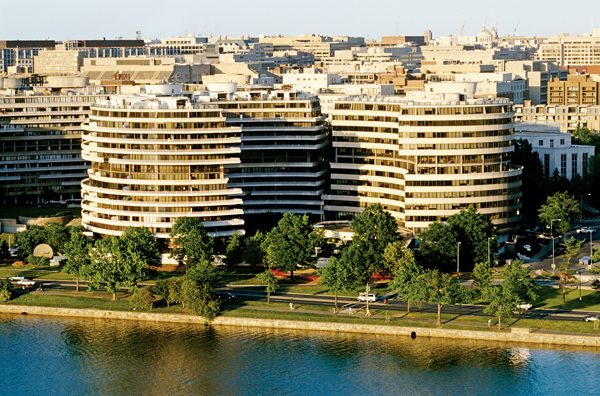
The Watergate was an early example of modernism; the first of its six buildings opened in the 1960s. It was designed by Italian architect Luigi Moretti. Its real fame came as the site of the 1972 burglary that eventually toppled President Richard Nixon. DC declared it a historic landmark in 2005.
Photograph of Watergate by Hoberman Collection/Corbis
Other groups of women, especially a couple of patriotic organizations based in Washington, picked up the preservation cause. The National Society of the Colonial Dames of America, founded in 1891 and headquartered in the Dumbarton House in Georgetown, has restored nearly 30 houses, including John Mason’s Gunston Hall in Fairfax County. The Daughters of the American Revolution, which has its headquarters near the White House, also took preservation to heart after its founding in 1890. In 1916 the organization began installing iron fences around the 40 surveying stones set in 1790 to mark the boundaries of DC.
The federal government’s interest in preservation began after the Civil War and was led by the War Department. It took control of important battlefields, including Manassas, Antietam, and Gettysburg, and continued to oversee Robert E. Lee’s mansion in Arlington, seized at the beginning of the war and soon surrounded by military graves. The War Department also took over Ford’s Theatre after Lincoln’s assassination, using it to house clerks, 22 of whom were killed when a structural failure caused it to collapse in 1893; restoration for use as a theater did not occur until the 1960s.
Virginia, the cradle of presidents and capital of the Confederacy, took an early interest in protecting its legacy. Before the Civil War, private groups in Alexandria were interested in saving buildings associated with hometown hero George Washington, including Gadsby’s Tavern, Christ Episcopal Church, and the John Carlyle House. Others bought and began restoring Thomas Jefferson’s Monticello in 1923 and Robert E. Lee’s boyhood home, Stratford Hall, in 1929. The Association for the Preservation of Virginia Antiquities, created in 1889, figured in the protection of the site of the Jamestown settlement. Most ambitious, beginning in the mid-1920s, was the restoration of Williamsburg, Virginia’s colonial capital. The money came from John D. Rockefeller Jr.
Franklin Roosevelt’s New Deal in the 1930s pushed the federal government into preservation. The National Park Service, created in 1916 to protect natural wonders in the West, assumed control of the Civil War battlefields and took over many historic sites, including Appomattox Courthouse and Harpers Ferry. Blair House, threatened with demolition, was bought by the federal government in 1942 and became a guest house for official visitors. The Park Service also was put in charge of developing a new list of nationally significant historic landmarks.
Another crucial moment for preservation came in 1946, when Alexandria became the third American city to pass a law protecting historic properties, following the example of Charleston and New Orleans. Georgetown—which had existed, along with Alexandria, prior to the move of the capital here in 1800—got a preservation law in 1950. It had a rich collection of homes built in the 18th and early 19th centuries, many of which were being renovated. When construction of the Whitehurst Freeway just after World War II resulted in demolition of the historic home of Francis Scott Key at the entrance to Key Bridge, outraged residents got through Congress a law creating a board to regulate demolition, new construction, and renovation in the neighborhood. The Old Georgetown Board, made up of three architects, remains a powerful force: It recently rejected the contemporary design of a new Apple computer store on Wisconsin Avenue because its design was deemed out of character.
The creation by Congress in 1949 of the National Trust for Historic Preservation, now headquartered in a historic apartment house near Dupont Circle, gave the preservation movement new momentum. The Mellon family was instrumental in its creation, with much of the political groundwork done by David Finley, the first director of the Mellon-created National Gallery of Art.
Modeled on an organization in England, the National Trust promotes preservation and owns nearly 30 historic houses. Three are in DC: Stephen Decatur House on Lafayette Square, Woodrow Wilson House in Kalorama, and the cottage at the Armed Forces Retirement Home that Lincoln used as a weekend retreat. Others are in Virginia, including James Madison’s Montpelier, Oatlands plantation in Loudoun County, and, on the same Fairfax site, Woodlawn Plantation and a Frank Lloyd Wright house.
The trust, headed by former Democratic operative Richard Moe, also is a political advocate. It helped organize the campaign to prevent Disney from building a theme park in Northern Virginia in the mid-1990s.
Don’t Tear It Down
Historic buildings face many threats, including some that are sudden. The Capitol and the White House, newly built at the time, were burned by British soldiers during the War of 1812. Many historic storefronts along 7th and 14th streets were destroyed during the riots following the assassination of Martin Luther King Jr. in 1968. Fires in 2007 damaged Eastern Market and the Georgetown Public Library, though both are being rebuilt.
Other treasures fall victim to neglect. Some are lost forever, but others are resurrected—such as the Willard Hotel, which 30 years ago was an empty shell. On the west campus of St. Elizabeths mental hospital, more than 60 old brick buildings, many from the 19th century, are boarded up awaiting renovation.
Sometimes historic buildings are sacrificed for what is considered the greater good. The Federal Triangle was Washington’s first great example in the 1930s, when several square blocks were torn down to make way for a federal office complex. Construction of the National Archives meant demolition of the city’s central food market. The Kennedy Center replaced the city’s largest brewery. And the Army Medical Museum, a handsome brick building on the Mall, was demolished to build the Hirshhorn Museum.
Washington’s biggest government-sanctioned destruction of historic buildings occurred in the late 1950s in Southwest DC, when hundreds of buildings were leveled and thousands of residents displaced in the name of urban renewal. Though the 550-acre neighborhood eventually might have gentrified into an attractive historic district like Capitol Hill, it was considered a rundown embarrassment at the time. Planners concerned about a population exodus to the suburbs decided to start afresh by building a new district of modern apartments, townhouses, and government buildings. Only Fort McNair, a few churches, and small clusters of historic townhouses were preserved.
Another big threat to historic properties was a plan in the 1950s to build a system of freeways through the city and inner suburbs as part of the new interstate highway system. That would have wiped out lots of old homes and stores, especially along Florida Avenue and in Takoma Park, but most of the plan was abandoned after citizen protest. The Metro system was built instead. One of the few inner-city highways built was the Southwest-Southeast Freeway, which remains as a reminder of how disruptive the freeways might have been. Protests in the 1950s led by Supreme Court Justice William Douglas also saved stretches of the C&O Canal, which was threatened by a proposed parkway.
As the federal government grew after World War II, along with trade associations and law firms, the pent-up demand for offices was met by tearing down low-rise townhouses and commercial buildings. The new structures of steel, concrete, and glass—many pushed up to the dozen stories DC’s height limit allowed and often derided as “K Street boxes”—came to dominate the area northwest of the White House. The new look was accompanied by a new name—the Golden Triangle.
These buildings in the Golden Triangle and in Southwest DC were going up just as Washington was beginning to embrace modern architecture. It was a development long resisted in the capital: Decades after modernism’s rise in Europe, Washington was building neoclassical temples such as John Russell Pope’s National Gallery of Art, opened in 1941. Slowly the city began acquiring a few distinguished modern buildings, including embassies built by the Germans, Danes, Swiss, and Brazilians and Eero Saarinen’s terminal at Dulles Airport.
All the construction meant there was bound to be lots of mediocrity. Sorting out the gems worth saving from the duds that can be torn down is the dilemma that historic preservationists and public officials will be facing as these building pass into old age.
One of the first successful uprisings against the destruction of historic buildings involved Lafayette Square, the park across from the White House that was the heart of Washington society in the 19th century. The square was lined on the east and west by beautiful old houses once occupied by the social elite, including naval hero Stephen Decatur, as well as such institutions as the Cosmos Club. The government in the early 1960s proposed tearing them down and replacing them with high-rise federal office buildings, but the Committee of 100—a patrician group that paid attention to urban planning and included such people as David Finley and Charles Glover Jr. of Riggs Bank—reacted. It enlisted the support of Jacqueline Kennedy for a new design for the square by John Carl Warnecke, which preserved the historic buildings and set back the high-rises behind them.
President John Kennedy already had set off a string of events that were to become pivotal in historic preservation. He had been struck, as he made his way down Pennsylvania Avenue during his inaugural parade, at how shabby the capital’s main ceremonial street had become. There were some grand old buildings along the north side—the Evening Star office, the Willard Hotel, the Hotel Washington, the National and Warner theaters, and the former studio of Civil War photographer Mathew Brady—but all had seen better days. On the south side of the avenue, the same could be said for the Old Post Office and the District Building, which were surrounded by the imposing buildings of the Federal Triangle. Through the efforts of a young government aide named Daniel Patrick Moynihan and others, the Pennsylvania Avenue Development Corporation was created in 1972 to oversee a renaissance.
One idea was to demolish most of the Romanesque Revival Old Post Office, leaving only its 315-foot clock tower. But a group of citizens got wind of the plan and organized a protest in 1971, marching from the office of the National Trust to the steps of the old building with placards. The group called itself Don’t Tear It Down, and within a couple of days hearings were held on Capitol Hill and the building was saved. The group broadened its focus from downtown to the entire city in 1984 and changed its name to the DC Preservation League.
On the north side of Pennsylvania Avenue, there also was a plan—conceived by New York architect Nathaniel Owings—envisioning an open space called the National Square east of the Treasury building. It would have meant the demolition of the Hotel Washington, the Willard, National Theatre, and the National Press Club. It never gained support.
Victory for the Preservationists
In 1979 the Smithsonian published Capital Losses: A Cultural History of Washington’s Destroyed Buildings by architectural historian James Goode. It included photographs and descriptions of more than 250 significant buildings that had been demolished since the city’s founding—mansions, apartment houses, hotels, churches, office buildings, theaters, schools, hospitals, and fire stations. It was a condemnation of indifference toward DC’s historic legacy—perhaps one of the most vivid polemics ever written about Washington. Many of the buildings had met the wrecking ball in the construction boom since World War II.
A few months before Goode’s book appeared, DC took its most crucial step toward embedding historic preservation in real-estate development. A new law, born of the struggle over the Old Post Office and other downtown buildings, set up a Historic Preservation Office to be guided by a nine-member Historic Preservation Review Board. Appointed by the mayor, the board was to include architects and historians, and its decisions could be reviewed by an administrative judge appointed by the mayor. The board was somewhat insulated from politics, as neither the mayor nor the city council had direct power to overturn its decisions. The Historic Preservation Office, with a staff of 15, is led by David Maloney, who has worked there more than two decades, and the board is chaired by Tersh Boasberg, a Cleveland Park resident, lawyer, and preservation expert.
One of the agency’s powers is to designate individual buildings as historic landmarks, a move that provides protection from demolition or damaging alteration. A few are landmarked each year—nominated by the DC Preservation League and other groups. The inventory includes about 600 properties all over the city. The interiors of some landmarks are specifically protected, including at the Warner Theatre.
The Historic Preservation Review Board also has power to designate entire neighborhoods as historic districts. About half of the current 44 are mostly residential, including such large neighborhoods as Georgetown, Capitol Hill, Cleveland Park, Dupont Circle, Kalorama Triangle, Mount Pleasant, and Logan Circle as well as others such as Foggy Bottom, U Street, LeDroit Park, Anacostia, and Shaw. Beyond those are specialized districts covering such places as Washington National Cathedral, Gallaudet University, the 15th Street financial district, and the ceremonial portion of Pennsylvania Avenue. Several districts are federal property, including the Federal Triangle, Washington Navy Yard, Marine Barracks, Fort McNair, Armed Forces Retirement Home, St. Elizabeths, McMillan Reservoir, National Zoo, and Rock Creek Park. One district covers just a few modest wood-frame houses along Grant Road in Tenleytown; another, Bladgen Alley/Naylor Court, preserves examples of the alley dwellings that once housed many of Washington’s working poor.
The law also gives the preservation agency the authority to review proposed construction both on landmarked buildings and inside historic districts. All owners—individuals and companies as well as federal and city agencies—must get approval to demolish all or any part of their property, to build additions, or to alter exteriors. The preservation office also must approve any new construction inside historic districts. Sometimes these reviews are accompanied by intense neighborhood politics, with historic preservation being used by activists as a cover for not-in-my-backyard sentiment or other agendas.
The agency has authority over a remarkable array of projects: an addition to the old Italian Embassy on 16th Street, extension of the Palm restaurant into sidewalk space, window replacement in a large Georgetown apartment building, demolition of a building to make way for Lauriol Plaza restaurant, the razing of a building that contained the old Central Liquor store, rehabilitation of the Blaine Mansion near Dupont Circle and construction of a small office building next door, and addition of suicide barriers to the Duke Ellington Bridge over Rock Creek Park.
Another Historic Preservation Office function is to decide which historic properties qualify for federal tax breaks. One is a 20-percent credit for rehabilitating income-producing apartments, office buildings, and retail space that can be crucial in making a project profitable. It can amount to tens of millions of dollars on such big renovations as the old Woodward & Lothrop department store or Union Station. The second break is a charitable tax deduction for homeowners who donate an easement promising not to alter the historic façades of their residences, sometimes amounting to a saving of $100,000 or more. Such windfalls have recently prompted the Internal Revenue Service to view the deductions with more skepticism.

Historic preservation in DC’s suburbs—and throughout the country—was given momentum in 1966 with the passage of a national preservation law. The demolition in 1964 of the ornate Pennsylvania Railroad Station in Manhattan to make way for a new Madison Square Garden raised an uproar and created the climate for President Lyndon Johnson to add preservation to his Great Society agenda. The law established a federal Advisory Council on Historic Preservation—its office is in the Old Post Office—and it put the National Park Service in charge of a new National Register of Historic Places, which calls attention to properties but does not give them legal protection. It also required every state to create a preservation agency.
The law underscored how preservation—like environmentalism—was becoming a favorite cause of liberals, with conservatives more often worried about preservation’s expansion of government regulatory power and its challenge to property rights. It came as no surprise, in the late 1960s, that a successful campaign to save and restore New York’s Grand Central Terminal was led by Jackie Kennedy.
The preservation ethic also reached into the DC suburbs. They have lots of historic courthouses, city halls, train depots, schools, post offices, banks, churches, and homes. Older cities such as Alexandria and Annapolis have long tried to protect their historic properties, but now virtually all area counties have preservation agencies, regulations, and advocacy groups. The National Register includes about 250 historic landmarks in Northern Virginia and 350 in suburban Maryland. There also are about 30 historically significant neighborhoods in the Maryland suburbs, including such communities as Takoma Park, Garrett Park, and Chevy Chase in Montgomery County and Hyattsville and Greenbelt in Prince George’s. In Virginia, the list of about 30 historic districts includes Old Town in Alexandria, Cherrydale and Lyon Park in Arlington, Herndon and Clifton in Fairfax, Occoquan in Prince William, and Leesburg, Middleburg, and Waterford in Loudoun.
These communities have types of historic properties that are sparse in DC. Some are reminders of an agrarian past, including country houses, farmhouses, tobacco barns, grist mills, springs, and quarries as well as three wooden covered bridges in Frederick County, the Bowman whiskey distillery in Reston, and the Red Fox Inn in Middleburg. Other landmarks date from the 20th century, including the Pentagon, parkways built by the National Park Service, parts of the old DC prison at Lorton, a spacecraft test facility near Goddard Space Flight Center in Beltsville, and the David W. Taylor Model Basin in Montgomery County that was used in designing ships for the US Navy. Also listed are the Bel Air stables in Bowie where two Triple Crown thoroughbreds were born, the carousel at Glen Echo Park, a vegetable cannery in Gaithersburg, a Chesapeake Bay seafood-packing plant on Solomons Island, and the country’s oldest airport, opened in College Park in 1911.
There’s also an agreement between a developer and preservationists to save most of the 42-year-old Comsat building in Clarksburg. The space-age structure of glass and aluminum, visible from Interstate 270, was designed by Cesar Pelli, also the architect of the new terminal at Reagan National Airport.
What Deserves a Brass Plaque?
One way for a place to qualify for the National Register—or a similar local list—is through an association with historic events. Civil War battlefields are examples, as are the remnants of Fort Ward in Alexandria and other forts built around Washington to repel a Confederate invasion. Several sites are associated with the assassination of Abraham Lincoln, including not just Ford’s Theatre but the home of Mary Surratt, who was hanged for aiding John Wilkes Booth.
A second criterion for a property’s historic designation is association with a notable person. That accounts for saving George Washington’s Mount Vernon, Woodrow Wilson’s house in Kalorama, and Gerald Ford’s house in Alexandria but also the Arlington home of Robert E. Lee, the Leesburg home of George Marshall, the Georgetown laboratory of Alexander Graham Bell, and the log cabin of poet Joaquin Miller in Rock Creek Park.
The home of Samuel Gompers, founder of the American Federation of Labor, and the office building where John L. Lewis ran the United Mine Workers union are listed, as are the homes of Civil War nurse Clara Barton, women’s-rights activist Alice Paul, and Frances Perkins, the first female Cabinet member. The environmental movement is recognized by the inclusion of a 1956 ranch-style house in Colesville once occupied by Rachel Carson, author of Silent Spring. Poised for listing by DC is the residence of Franklin Kameny, one of the city’s first gay activists. So far no sites here associated with Hispanics or Muslims are on the list, though the Chinatown headquarters of the On Leong Chinese Merchants Association, a pagoda-decorated building on H Street, was landmarked in 1996. Danzanksy Funeral Home on 14th Street, built in 1910 as the city’s first Jewish-owned funeral home, was declared a landmark in 2007.
With DC’s large African-American population, it is no surprise that there are protected sites associated with black leaders. The DC homes of Frederick Douglass, Mary McLeod Bethune, Mary Church Terrell, Carter G. Woodson, and Ralph Bunche are landmarked as well as the small clapboard home of Dr. Charles Drew in Arlington. The federal government’s National Register, though not DC, recognizes John Philip Sousa Junior High School in Southeast, which figured in legal challenges to segregation, as well as Langston Golf Course, which opened as a nine-hole course for blacks in 1939.
Other African-American institutions listed include several churches, the Lincoln Theatre, the old Whitelaw Hotel, and the True Reformer Building. DC also has recently listed the Georgia Avenue building that housed Billy Simpson’s House of Seafood and Steaks, a favorite of Adam Clayton Powell, Dick Gregory, Sidney Poitier, and Ella Fitzgerald.
Architecture alone is enough to qualify a building for historic status. Some landmarked buildings are the work of name architects: those who practiced in the 19th century such as William Thornton (the US Capitol, Tudor Place) and Adolf Cluss (Smithsonian’s Arts and Industries Building, Eastern Market), between the world wars such as Paul Cret (Federal Reserve Board, Folger Shakespeare Library) and John Russell Pope (National Gallery of Art West Building, Jefferson Memorial), or afterward—such as Harry Weese (Arena Stage) and Marcel Breuer (HUD).
Even projects of well-known developers are recognized, especially Harry Wardman, whose work included early-20th-century rowhouses and grand apartment houses such as the Dresden on Connecticut Avenue. Also protected are the works of sculptors and landscape architects who produced many statues, fountains, and parks.
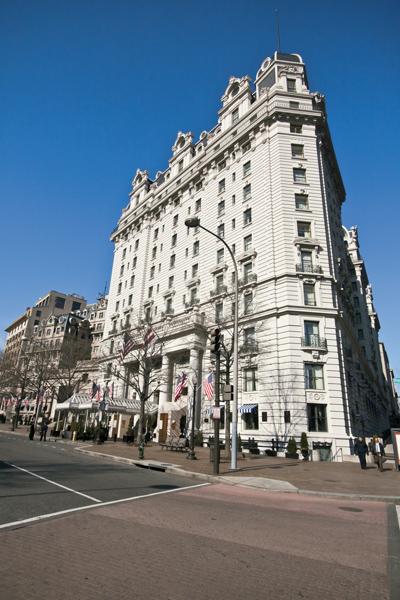
Some buildings are landmarked even if the architect is unknown because they are examples of certain styles—an approach some have dubbed Noah’s Ark preservation. Houses done in Federal, Georgian, Greek Revival, Gothic Revival, Italianate, Second Empire, Queen Anne, and stick style or shingle style—all have been preserved for their style alone. There also are Sears mail-order houses and a narrow “shotgun house” on Capitol Hill.
Among the 20th-century styles that have gained historic stature are art moderne and art deco, which were popular in the 1920s and ’30s. Several of these structures have been landmarked, including the old terminal at Reagan National Airport, National Naval Medical Center, Folger Shakespeare Library, the old Greyhound bus terminal, and the Kennedy-Warren apartment house. Art deco or art moderne movie theaters in Silver Spring, Bethesda, and Greenbelt are on the list along with a former Sears store in Tenleytown, a Chrysler dealership in Arlington (now a Gold’s Gym), and warehouses once used by Woodies and Hecht’s. The Hecht’s warehouse, on New York Avenue, has been bought by a Philadelphia company that hopes to incorporate it into a new retail hub.
A building or place may also qualify for landmark status if it exemplifies some aspect of American culture. This is a category that includes structures as humble as tobacco barns and as elaborate as grand hotels. DC has landmarked numerous churches and synagogues, fire stations, cemeteries, apartment houses, public schools, rowhouses, trolley-car barns, bridges, and banks.
DC’s oldest landmarks include the scenic Potomac Gorge and archaeological sites with evidence of Native American presence. The city plan conceived by Pierre Charles L’Enfant in 1791 is listed along with early military installations. The industrial history of the Georgetown waterfront is recalled in remnants of mills, a foundry, warehouses, and a lime kiln. Pre–Civil War federal buildings include the Capitol, the White House, Treasury, the old Patent Office, and such cultural and scientific institutions as the Smithsonian Castle and the first Naval Observatory on the hill east of the Kennedy Center. One of the largest landmarks is the Washington Aqueduct, the innovative water system engineered by Montgomery Meigs.
Between the Civil War and World War I, Washington grew from a modest-size town to a real city, leading to a boom that left many landmarked buildings. Among the most impressive government buildings were the Library of Congress, the Government Printing Office, the Eisenhower Executive Office Building, and the Pension Building (now the National Building Museum). Many Gilded Age mansions were built, especially around Dupont Circle, including those of a beer baron (Christian Heurich), a gold-mine magnate (Thomas Walsh), a wealthy diplomat (Larz Anderson), a railroad-car manufacturer (the Pullman family), and another railroad millionaire named Richard Townsend, whose home became the Cosmos Club. Also landmarked from this era are Union Station, the National Museum of Natural History, Benjamin Franklin School, the Adams Memorial in Rock Creek Cemetery, the Franciscan Monastery near Catholic University, and the Taft Bridge over Rock Creek Park.
One of the big national debates among preservationists is how much pop architecture from the 1950s should be saved—much of it inspired by the rush to the suburbs and worship of the automobile and the open road. Should a few motels, diners, drive-in burger joints, ice-cream stands, gas stations, drive-in theaters, bowling alleys, and skating rinks—a few with eye-popping design and lots of neon—be saved? How about making landmarks of a few of the ranch-style suburban homes that nurtured the baby boomers?
Washington’s preservationists have been restrained in landmarking pop architecture—sometimes known as “googie” or “doo-wop” architecture. Just being a beloved institution has not been enough—no landmarking of Hot Shoppes, Tom Sarris’ Orleans House, or the Circle theatres. As a rule, it’s the architecture, not the brand, that counts, though a place like Ben’s Chili Bowl, housed in a 1910 building originally built as a silent-movie theater, might qualify on both architectural and historic grounds.
Among the few examples here of pop architecture on the National Register are the 29 Diner, built in Fairfax City in 1947, and downtown DC’s Waffle Shop, built in 1950 on Tenth Street and now scheduled to be dismantled and reassembled nearby. Little Taverns have often been a matter of dispute between preservationists and developers, and there was resistance to the recent demolition of Bob Peck Chevrolet in Ballston, whose circular showroom fringed with crownlike detailing was a distinctive expression of ’50s pop design.
Wrecking-Ball Wars
The DC Preservation League, begun as that feisty band of placard-waving marchers under the name Don’t Tear It Down, has become a force to be reckoned with by real-estate developers. It has a small staff headed by Rebecca Miller with an office in the National Building Museum and has a board of architects, lawyers, professors, and real-estate professionals headed by John Bellingham, founder and president of Monarc Construction. Always on the lookout for historic properties, the DCPL has successfully nominated 160 landmarks and done the research for 13 historic districts over the past three decades. It also monitors proposed real-estate projects and leaps to the defense of historic buildings before the Historic Preservation Office and the courts. Alongside the DCPL in many battles stands the Committee of 100, founded in 1923 to protect the sanctity of the L’Enfant plan.
Each year the Preservation League garners press coverage by issuing a list of ten historic places it considers the city’s “most endangered”—a list it began in 1996 in emulation of a nationwide list issued each year by the National Trust for Historic Preservation. The local list usually includes some landmarks that are legally protected but are deteriorating or face a threat from development as well as places that have yet to gain recognition. Some are repeated from year to year, and many eventually are landmarked. Over the past few years the list has included the city’s last remaining trolley tracks in Georgetown, several old public schools, wood-frame houses in Anacostia’s Barry Farms, and Congressional Cemetery as well as high-profile places such as St. Elizabeths Hospital and the Smithsonian’s Arts and Industries Building, whose renovation is estimated to cost $400 million.
The focus of preservationists on historic and architectural values has the potential to put them in conflict with developers and politicians interested in economic growth and increasing the tax base. For developers, often the easiest way to make money is to clear a tract of existing structures and build something entirely new.
Though DC’s preservation law makes it hard for an owner or developer to demolish all or part of a landmarked building, it is not impossible. If the building replacing it has “special merit”—architectural distinction, affordable-housing units, space for the arts—the Historic Preservation Review Board has the option to give its approval. Another of the law’s provisions, lifting a property’s protection if an owner can demonstrate “economic hardship,” is rarely used.
The special-merit provision allowed demolition of a historic Elks lodge to make way for the old DC convention center, and Arena Stage was allowed to demolish part of its original theater to allow for an expansion now under way. The Corcoran Gallery of Art also got approval to tear out the back wall of its 1897 Beaux Arts building to merge it with a modern addition by Frank Gehry that was never built.
One of the most famous preservation battles came in the late 1970s, when the city’s preservation law was new and preservationists and developers were beginning to test each other. Oliver Carr, one of the first developers to see the potential in revitalizing the city’s old commercial district, proposed an office building on 15th Street across from Treasury that involved demolition of three historic buildings—Rhodes Tavern and two neoclassical buildings, the 1907 Metropolitan Bank and the 1912 Albee building, which also contained a theater. Rhodes, a three-story structure built in 1800, was one of the city’s oldest buildings and had served at various times as a tavern and hotel, an unofficial city hall, a bank, a stock exchange, and a press club. The head of the Commission of Fine Arts, the late J. Carter Brown, sided with Carr, but many preservationists protested. In the end, the marble façades of the Metropolitan Bank and the Albee were saved, but Rhodes Tavern was demolished. Carr went on to renovate the Willard, but many preservationists have never forgiven him for razing Rhodes Tavern.
Over the years there have been many other conflicts between preservationists and developers, especially in the city’s commercial core. The Willard, Warner Theatre, Franklin School, Kann’s and Lansburgh’s department stores, Red Lion Row near George Washington University, the Greyhound bus terminal, the Woodward Building, the Bond Building, the Homer Building, and St. Elizabeths Hospital set off epic battles, some including lawsuits.
Sometimes preservationists arrived too late to save a building. An example was the Georgian Revival country house on the Valley View estate on Foxhall Road. When the 17-acre property was bought in 2001 with the idea of building an official home there for DC’s mayor, the old house was demolished before it could be landmarked and protected.
The result of three decades of lawsuits and negotiations is a rapprochement between preservationists and developers that allows economic growth to proceed along with lots of renovation of historic buildings. Rarely are they demolished entirely; one of the last big ones, in the 1980s, was the 1893 Palais Royal department store (later a Woodies annex), torn down to make way for a hotel near the Metro Center subway station. Developers have become accustomed to hiring architects who are skilled at incorporating historic buildings or their façades into larger projects—an example being 1001 Pennsylvania Avenue, a Hartman-Cox design that weaves portions of several historic buildings into a new block-square office complex.
Robert Peck—who has held top positions at the Preservation League, the Greater Washington Board of Trade, and the General Services Administration—sums up the past 30 years this way: “Preservationists once had to sit in the path of the bulldozer to save buildings. Then we got one of the strongest laws in the country and had to adapt to having lots of leverage.”
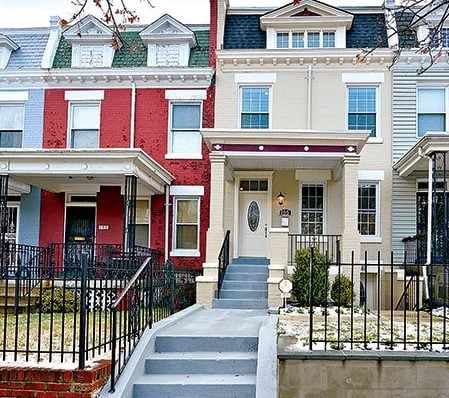
In historic districts composed mainly of homes, the preservation law gives the Historic Preservation Office regulatory power that plays out mostly when a homeowner wants to make alterations or additions. Interior renovations—redoing a kitchen—are not reviewable. The focus is on the appearance of a house’s exterior, especially the front, because that most affects its compatibility with the neighborhood. Any exterior alteration that requires a building permit—an addition, new roof, new windows, porches, railings, steps, and other changes—must be approved by the HPO, with some disputes resolved by the Historic Preservation Review Board. The color of exterior painting is not regulated—a looser standard than in some suburban subdivisions.
About 3,600 permits were requested in DC historic districts during 2007. Two districts accounted for the most—905 on Capitol Hill and 622 in Georgetown—but there also were 294 in the area around U Street, 256 in Dupont Circle, 209 in Mount Pleasant, and 168 in Cleveland Park. About 90 percent were handled administratively, issues worked out over the counter between the Historic Preservation Office staff and homeowners or their architects, with others going to the Historic Preservation Review Board for action. Councilman Jack Evans was one of those who applied in 2006—getting approval to cut a new window into the side of his brick home in Georgetown to ventilate an up stairs bathroom.
The replacement of windows in historic houses is one of the most common sources of contention. A few owners prefer to replace older wood-framed windows with cheaper ones framed with vinyl. The Historic Preservation Office nearly always prohibits this on the grounds that the new windows are historically out of place. In some cases, when owners have forged ahead without a permit, they have been cited by city inspectors, fined, and forced to rip out the new vinyl windows and replace them.
Many of the city’s oldest neighborhoods have carried historic status for years, but others are being added now. The most recent were Washington Heights, an area near the Washington Hilton, in 2006 and Foxhall Village in 2007.
Not every neighborhood with lots of older homes is eager for historic designation—a fact that became obvious last fall in a vote in Chevy Chase DC. While one group of activists pushed for recognition by the city, another group rose in opposition—filling neighborhood lawns with signs both for and against. Those in favor argued that designation would prevent knockdowns of older homes and construction of out-of-scale McMansions. But opponents feared that residents would lose the freedom to alter their homes as they pleased if they became entangled in the historic-preservation bureaucracy, whose rules they considered too arbitrary and vague. The Historic Preservation Review Board has power to create a historic district without a favorable neighborhood vote, but the outcome—363 against to 108 in favor—was enough to kill the idea for now.
Polishing Up Old Treasures
Of the many ways of saving historic buildings, the gold-plated way is to put them through expensive top-to-bottom renovations and restore them to their original use. Hundreds of old Washington houses have enjoyed rebirths, and lots of grand old public places have gotten the full treatment over the past generation. Just a few: the Washington Monument, the Smithsonian Castle, the Warner Theatre, the Pension Building, the main building of the Library of Congress, the National Archives, the US Botanical Garden, the Mayflower Hotel, Ford’s Theatre, Treasury, the Eisenhower Executive Office Building, the Mellon Auditorium, the Hay-Adams, the Pentagon, National Theatre, the Renwick Gallery, the Lincoln Cottage, the Monocacy Aqueduct, the Willard, the Old Patent Office, the Freer Gallery, the District Building.
Some historic properties have been saved by being moved out of harm’s way. DC’s oldest house, a wood-frame Georgian in Kalorama known as the Lindens, was built in Danvers, Massachusetts, in 1734 and reconstructed in Washington in 1934. The Pope-Leighey house, one of Frank Lloyd Wright’s Usonian houses, was moved out of the path of I-66 in Arlington and set up on the grounds of Woodlawn Plantation. And Adas Israel, built in 1876 at Fifth and F streets as one of DC’s early synagogues, was moved a few blocks east and converted to a Jewish museum to clear a site for Metro headquarters.
Though re-creating buildings lacks authenticity, it is sometimes done in hopes of bringing history to life. Virginia’s colonial capitol at Williamsburg is an example, as is George Washington’s birthplace east of Fredericksburg, which was built from scratch in the 1930s without much knowledge of how it might have looked, a technique once derided as “conjectural reconstruction.” At Mount Vernon, a better-documented replica of George Washington’s whiskey distillery opened in 2007.
Some historic properties achieve new stature by stripping away ill-advised alterations. Only when workers removed a sheet-metal skin from the Greyhound bus terminal in downtown DC was it realized that its art moderne façade remained intact. James Madison’s Montpelier has just gone through a renovation that included removing a couple of additions and pink stucco added by a later owner, one of the du Ponts, to restore the smaller red-brick house that the founding father knew in the 18th century.
When historic buildings are doomed, preservationists may try to keep fragments. The J.W. Marriott hotel on Pennsylvania Avenue incorporates in its façade some stonework from a theater that once stood there. Two dozen Corinthian columns removed from the US Capitol now stand on a hill at the National Arboretum.
One of the most controversial preservation techniques is “façadism”—saving the front edge of older buildings and constructing taller modern offices behind them. Washington in the 1980s was one of the first cities to adopt façadism, which horrified some preservationists but was tolerated by others as the best compromise. The Homer Building on 13th Street is one of many examples—the first four stories of the façade date from 1914, but the guts of the building are new, including a parking garage and eight new floors on top. Adding floors on top of old buildings, a practice pioneered by Shalom Baranes, came to be known as top-hatting. Another variation on façadism can be seen in Red Lion Row west of the White House: The façades of 13 low-rise historic buildings were saved and incorporated into an internal shopping mall that connects with a high-rise office building at the rear of the site.
Condos in the Delivery Room
Because many old buildings outlive their original function, their continued existence often depends on new uses. The pioneers of such recycling in Washington were foreign countries during the Depression. As wealthy families who had built mansions during the Gilded Age found them too expensive to maintain, foreign governments bought the old homes for use as chanceries and as ambassadorial residences, turning Massachusetts Avenue into Embassy Row.
DC’s downtown department stores—Garfinckel’s, Woodward & Lothrop, Hecht’s—have disappeared, but their buildings live on as home to Barnes & Noble, H&M, Rosa Mexicano, and lots of offices. The old Garfinckel’s in Spring Valley is now a Crate & Barrel, the Sears on Wisconsin Avenue is a Best Buy, and a food market built in 1865 in Georgetown is a Dean & DeLuca.
It says something about the transformation of Washington’s economy that a building on McPherson Square built as headquarters of the Southern Railway is now filled with law firms and the Soap and Detergent Association. An old printing plant in Eckington where National Geographic was once produced now contains studios of Sirius XM Radio, and a former Chesapeake & Potomac Telephone Company warehouse on North Capitol Street is being converted to the headquarters of National Public Radio. A lumber warehouse in Shaw, built in 1906, is now used by Bread for the City, which provides food, clothing, and medical care for the poor.
The city’s boom in museums owes much to their natural fit with historic buildings looking for a new life. The National Building Museum found a home in the Pension Building, built in the 1880s to serve the needs of Civil War veterans, and the National Museum of Women in the Arts is located in a Masonic temple built in 1908. Locally, the Smithsonian has four off-the-Mall museums in historic buildings—the Renwick, which had been used most recently as a court building; the National Postal Museum, housed in an old post office next to Union Station; and the National Portrait Gallery and American Art Museum, which share the onetime Patent Office that was begun in 1836. The International Spy Museum occupies buildings that were constructed in the 1870s and sat empty for decades, and a new Armenian holocaust museum will be occupying an elegant old bank building on 14th Street.
Declining enrollment has forced the closing of historic DC public schools, several of which are now occupied by charter schools. The Benjamin Franklin School, built just after the Civil War, was used for several years as a homeless shelter, a function that will soon be assumed by the Joseph Gales School near Union Station.
A number of private schools use historic properties, including a mansion built in 1801 occupied by Maret and one built in 1827 used by Sidwell Friends. The Field School has adapted an art moderne home built on Foxhall Road by developer Morris Cafritz and wife Gwendolyn in 1937, and the Levine School of Music occupies a building in Forest Hills that once housed a geophysical laboratory of the Carnegie Institution of Washington.
The popularity of downtown living has led to the conversion of historic buildings to condominiums or rental apartments. Several old schools and office buildings have made this transition along with a couple of steam laundries and a church. The Columbia Hospital for Women, which was built in 1915 and witnessed 270,000 births before it closed in 2002, has been transformed into condos priced at more than $1 million. Half a dozen historic neighborhood movie theaters have been converted to retail stores, especially drugstores.
An old post office near the Verizon Center has been reborn as the Hotel Monaco, and a nearby Riggs bank is now a Courtyard by Marriott. Several old mansions have become venues for weddings and large parties, including both Evermay and Halcyon House in Georgetown and Woodend, a 40-acre Chevy Chase estate with a mansion that’s headquarters to the Audubon Naturalist Society. The Pension Building, now the National Building Museum, and the Mellon Auditorium in Federal Triangle are two of the city’s grandest party spaces. The Atlas movie house on H Street, Northeast, built in 1938 in art moderne style, has become a neighborhood performing-arts center surrounded by lively bars. And a McCormick & Schmick’s restaurant occupies a Masonic temple on F Street built in 1870.
Another transformation is proposed for the Uline Arena (a.k.a. Washington Coliseum), north of Union Station, which was declared a historic landmark in 2006. Built in 1941 by a company that owned a nearby ice plant, it became a venue for ice hockey, skating, pro basketball, boxing, wrestling, swing dances, the first US performance of the Beatles, speeches by Malcolm X, and go-go music. The building, used for many years as a trash transfer station and now as a parking garage, is owned by developer Douglas Jemal, who plans to turn it into an office-retail complex.
The largest recycling of a historic property in Washington involves St. Elizabeths, the sprawling government complex for the treatment of the mentally ill that sits atop a hill on the east side of the Anacostia River. Established in the 1850s, the hospital’s west campus covers 176 acres, with a panorama of DC and Northern Virginia, and features bucolic grounds and more than 60 red-brick structures, about half of them built in the 19th century. Among its most famous patients was the poet Ezra Pound, who was found mentally incompetent to stand trial on charges of treason for his anti-Semitic propaganda during World War II on behalf of the Italian government of Benito Mussolini.
The old buildings of the west campus at St. Elizabeths have been empty since that portion of the hospital was shut down a decade ago—boarded up by the General Services Administration and awaiting a new use. The campus is likely to become the high-security headquarters for the Department of Homeland Security, accommodating 14,000 workers in renovated historic buildings and several new buildings. Historic preservationists have objected, arguing that the new buildings will destroy too much open space and overwhelm the older buildings. They have won some concessions to make the project more sensitive to the historic setting, but a DHS takeover has been moving toward approval. It’s possible that someday the secretary of the nation’s antiterrorism agency will occupy an office in the same building that once held Ezra Pound.
Icons or Monstrosities?
Capitol Park was completed in 1959—a complex of high-rise apartments and townhouses that was the first project in the Southwest urban-renewal area. It was designed by Chloethiel Woodard Smith, Washington’s first prominent female architect, with noted landscape architect Dan Kiley responsible for the surrounding open space that included a patio, pavilion, reflecting pool, and mural. By 2003 the complex was owned by Monument Realty, which decided to get rid of Kiley’s creation and fill the space with more apartments. When the DC Preservation League and Committee of 100 realized what was happening, they successfully got the Historic Preservation Office to declare the complex a historic landmark, but not before the patio, pavilion, and reflecting pool were demolished.
The situation was tinged with irony. Here was a modernist building being protected by preservationists that just 45 years earlier had required the demolition of a block of historic houses and stores. Monument Realty began negotiations on a compromise. The result: Monument was allowed to build its apartments; in exchange it agreed to preserve and move the outdoor mural and created a $450,000 mitigation fund to be used for preservation efforts citywide.
The Capitol Park controversy served as a wake-up call for preservationists on the question of saving mid-20th-century buildings. Part of the $450,000 was spent on a well-attended symposium in 2006 discussing buildings of the “recent past.” It was sponsored by a new program of the DC Preservation League called DC Modern, which is headed by Joan Brieton, a former Preservation League trustee. Other money is being used for a study—concerning the historical context of modern architecture in the city from the end of World War II to the mid-1970s—being conducted by Robinson & Associates, a DC preservation consulting firm.
Preservationists consider this an opportune moment to address the modern-architecture issue. There’s a rough rule of thumb that buildings should be at least 50 years old before being considered for historic designation—enough time for some historical perspective—and many of DC’s modern buildings are approaching this age. Just a few already have been landmarked—Arena Stage, the Watergate, HUD, the US Tax Court, the Martin Luther King library, the Washington Hilton, and the Christian Science church.
There is some sense of urgency—already, a couple of modern buildings that might have gained recognition have been altered. The Longfellow Building at Connecticut and Rhode Island avenues, designed by William Lescaze in 1941 as Washington’s first office building in a sleek modern style, was ruined with a skin of stone. In 2007, the renovation of the National Permanent Building, on Pennsylvania Avenue west of the White House, resulted in the removal of distinctive exterior black ductwork that had won much critical praise for Hartman-Cox when it was built in the 1970s.
Of the hundreds of buildings built here since World War II, a few may have such high replacement cost that they are unlikely to be demolished, even if they are architecturally undistinguished. Like it or not, the huge Rayburn House Office Building, a simplified classical structure built in 1965, may be here to stay. A few, including the critically panned National Museum of American History, have had so much money invested recently in renovations that nobody is going to tear them down anytime soon.
Any list of potential landmarks would include these: museums such as Air and Space and the Hirshhorn; a couple of Edward Durell Stone works, the Kennedy Center and the headquarters of the National Geographic Society; the University of the District of Columbia; libraries at Georgetown and George Washington universities; the Brookings Institution; and the Washington Post Company.
There are several midcentury federal office buildings on Capitol Hill, including the Rayburn on the House side and the Hart on the Senate as well as the James Madison Building of the Library of Congress. South of the Mall are many other office buildings constructed as part of the Southwest urban-renewal project, including one by Marcel Breuer named for Hubert Humphrey and several that are part of the L’Enfant Plaza complex.
At least half a dozen apartment and townhouse complexes in Southwest (including Tiber Island/Carrollsburg Square and Harbour Square) are likely candidates for historic designation, including the unique River Park townhouses, designed by Washington architect Charles Goodman and built with barrel-vaulted aluminum façades by Reynolds Aluminum to promote the company’s products.
Many areas of DC have modernist buildings that might set off an argument. What about the headquarters of the AFL-CIO on 16th Street? Metro headquarters at Fifth and F streets? Children’s National Medical Center, the Government Accountabilty Office, or the Pan American Health Organization? Or what about that Best Western hotel on South Capitol Street—its flamboyant design done in 1962 by Morris Lapidus, who gained fame as architect of resort hotels in Miami Beach?
Hidden away in well-to-do neighborhoods in Northwest DC are a number of private homes designed by some of the country’s best-known modern architects. Only one—an I.M. Pei house in Cleveland Park known as the William Slayton House—has been individually landmarked so far, though the David Lloyd Kreeger house by Philip Johnson on Foxhall Road is protected as a museum. Two small Frank Lloyd Wright houses in the suburbs—the Pope-Leighey in Fairfax and another in Bethesda built for one of Wright’s sons—are on the National Register. Other likely candidates include modern houses by Washington architect Hugh Newell Jacobson as well as others by out-of-town notables Richard Neutra, Marcel Breuer, Charles Moore, and the Architects’ Collaborative, which was led by Walter Gropius. The Architects’ Collaborative houses, built in the early 1950s, were among the first modern houses in Washington and were built for two members of the Hechinger family; they sit side by side on a street in the Palisades.
One of modern architecture’s handicaps in seeking historic protection is that many people hate the look. The antipathy is not universal, and public opinion may change—Victorian houses, now so lovable, were once considered horrid. But many aspects of modernism—all that soulless concrete, steel, and glass, the absence of ornamentation, the barren and inhospitable plazas—leave people cold.
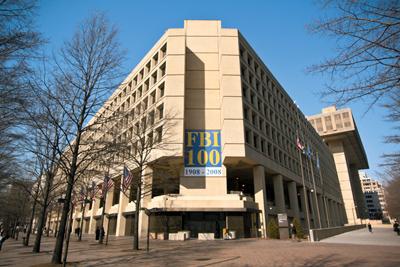
Few buildings elicit this emotion as much as the Pennsylvania Avenue headquarters of the FBI, named for former director J. Edgar Hoover. Completed in 1974 in the Brutalist style—like the Christian Science church—it covers an entire city block, across the avenue from the Old Post Office, where the modern preservation movement in Washington began. With its courtyard walled off from pedestrians due to security concerns, the FBI is no longer welcoming even to the schoolchildren who once took its famous tour to see the wanted posters, machine guns, and crime lab.
Someday a decision will have to be made: Save it? Tear it down?
This article first appeared in the March 2009 issue of The Washingtonian. For more articles from that issue, click here.